Cat Gum Color: Pink, Pale, Yellow, Blue
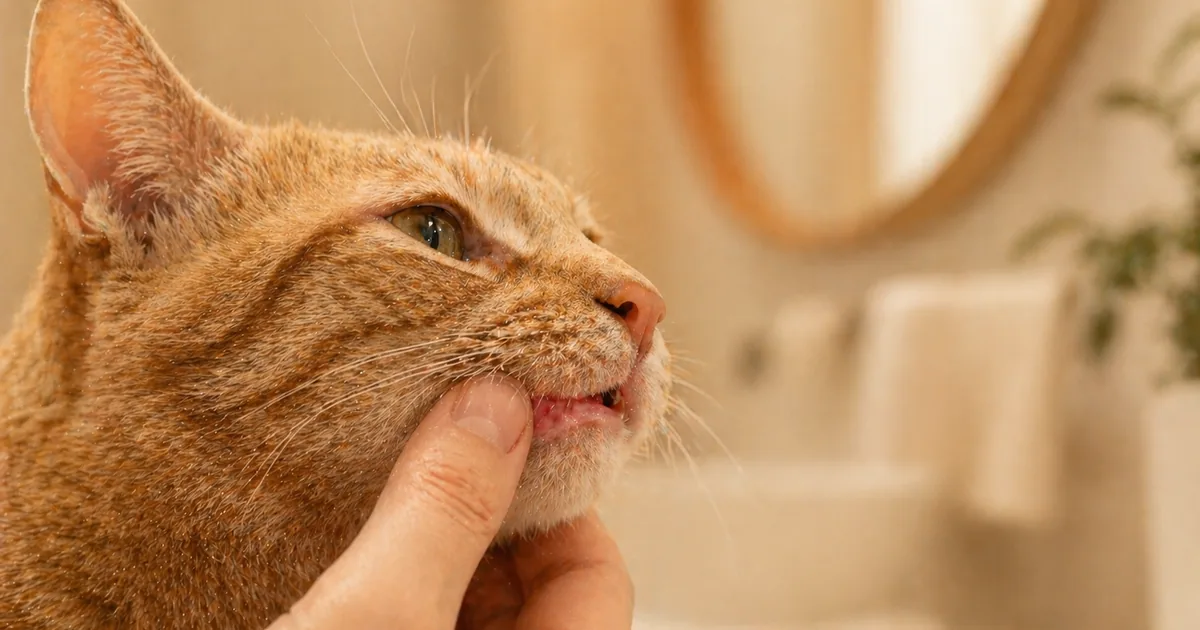
Gum color is the single fastest, cheapest home check of a cat's cardiovascular and metabolic status. Vets assess it every exam. You can too. It takes 3 seconds and can tell you whether something is "call tomorrow" or "go to the ER now."
How to check
Lift your cat's upper lip gently and look at the gum tissue above the canine tooth. In a healthy cat, it should be bubblegum pink. Press lightly with your fingertip; the spot should turn white, then pink again in under 2 seconds (capillary refill time, or CRT).
Some cats have naturally pigmented gums, especially Bombay, Siamese, and some mixed-breed cats. Find a non-pigmented area — the tongue underside works if gums are all dark.
The color chart
Healthy pink (normal)
Uniform light-to-bubblegum pink, CRT under 2 seconds. Cat is fine circulatorily.
Pale pink or white (anemia / shock / blood loss)
Emergency. Causes:
- Internal bleeding (trauma, toxin — e.g., rat poison)
- Anemia (parasites in kittens, CKD, autoimmune, cancer)
- Severe dehydration
- Shock (trauma, sepsis, cardiac)
- Hypothermia
What to do: emergency vet immediately. Pale gums + weakness = circulatory collapse.
Yellow / jaundiced (icterus)
Emergency. Causes:
- Hepatic lipidosis
- Cholangitis (liver/bile duct infection)
- Hemolysis (red blood cell destruction)
- Liver tumor
- Extrahepatic biliary obstruction
What to do: same-day vet visit.
Bright red (shock / sepsis / toxin / overheating)
Emergency. Causes: septic shock, heat stroke, carbon monoxide poisoning, severe allergic reaction, toxin exposure.
Blue / purple (cyanosis)
Emergency. Causes: severe respiratory distress, heart failure, pleural effusion, airway obstruction, cyanide or severe oxygen deprivation.
What to do: blue gums + any breathing difficulty = call ahead to the ER vet, carry the cat to the car, drive. Do not wait.
Tacky / dry (dehydration)
Press your finger firmly; a normal cat's gum is moist and wet. Dry, tacky gums mean dehydration. Combined with skin tenting, it's a vet visit.
Using CRT to sharpen the signal
- Under 1 second: may indicate hyperdynamic circulation (early shock, excitement)
- 1–2 seconds: normal
- 2–3 seconds: mild dehydration or poor perfusion — vet visit
- Over 3 seconds: significant circulatory compromise — emergency
Combine with two other fast checks
1. Heart rate
Place your palm flat on your cat's chest behind the elbow. Count beats for 15 seconds and multiply by 4.
- Normal: 140–220 bpm
- Under 100 or over 240 at rest: concerning
2. Respiratory rate (at rest or asleep)
Count chest rises for 30 seconds × 2.
- Normal awake: 20–30/min
- Normal asleep: under 30/min
- Over 40 asleep: abnormal — vet call
The three together — gum color, heart rate, respiratory rate — catch roughly 90% of cats in circulatory or respiratory crisis within 60 seconds.
Build your cat's normal baseline
The best time to learn gum color is when your cat is healthy. Check once during a calm moment and remember the normal shade. Some cats have naturally pale pink gums, some have freckles or pigment, and some have dark patches. The emergency signal is often the change from your cat's normal, not a universal color swatch.
Pair the gum check with behavior: hiding, weakness, rapid breathing, repeated vomiting, or collapse makes abnormal gum color far more urgent.
Color plus symptom matrix
| Gum finding | Paired symptom | Concern |
|---|---|---|
| Pale/white | Weakness or cold paws | Shock, anemia, or blood loss |
| Yellow | Not eating or vomiting | Liver or red-blood-cell problem |
| Blue/purple | Fast or open-mouth breathing | Oxygen emergency |
| Bright red | Heat, collapse, or toxin exposure | Sepsis, overheating, toxin, or shock |
Triage your cat in under 60 seconds
Not sure if this is an emergency? CatMD runs feline-specific triage on symptoms or photos and returns a 0–99 health score with urgency tier, differentials, and a vet-ready summary.
Get the app