Does Your Cat Hate You? What Body Language Actually Means
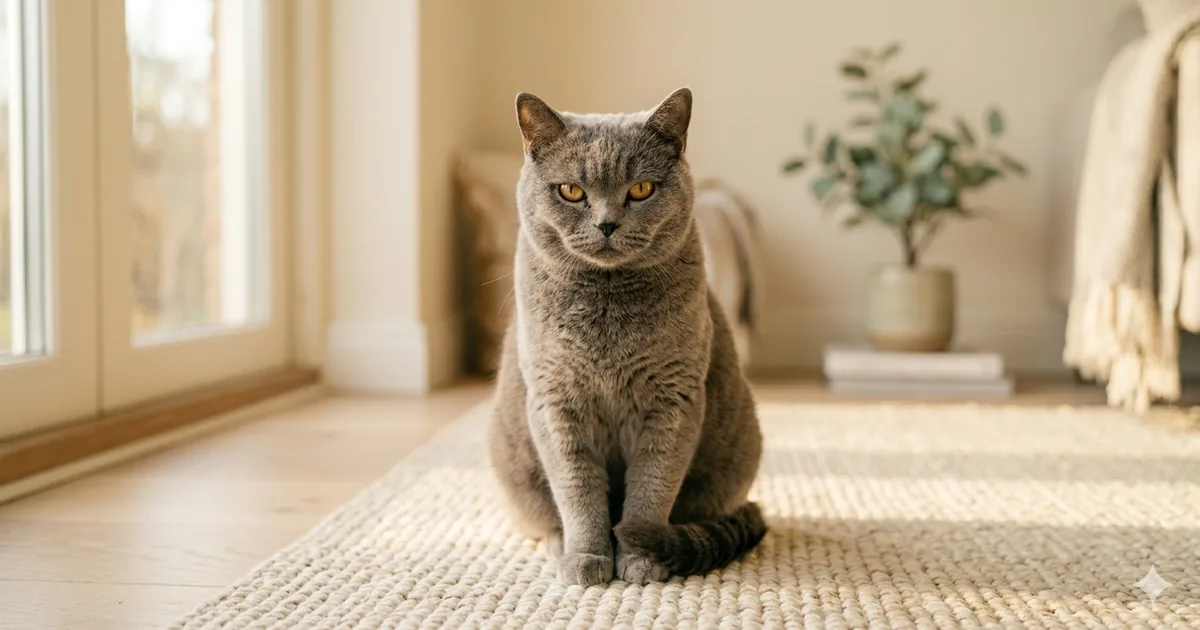
You're sitting on the sofa. Your cat is across the room, tail twitching, eyes locked on you. She gets up, walks past you without stopping, knocks something off the bookshelf, and stalks into the next room.
You think: she hates me.
You're wrong about that. Not because cats can't be irritated with you — they can, frequently — but because the signals you're reading as "hate" almost never mean what you think. The vocabulary is just unfamiliar. When you don't know cat, the most innocuous body language reads as hostility, and the warmest moments read as nothing at all.
This is a guide to what those signals actually mean. Five common moments cat owners misinterpret, what the cat is actually saying, and how to read it next time.
1. The tail twitch isn't anger. It's a signal you haven't decoded yet.
A swishing or twitching tail tip looks dangerous if you're thinking in dog. A dog's wagging tail = friendly; a still tail = uncertain; a tucked tail = afraid. So a twitching cat tail must mean… angry?
It doesn't. A cat's tail-tip twitch is the most overloaded signal in feline body language — it can mean any of: focus, mild irritation, anticipation, hunting mode, decision-making, or just thinking. Without context (ear position, eye state, posture, what the cat is looking at), the twitch alone is uninterpretable.
The real read: if her ears are forward and she's watching something specific, the twitch is focus — she's locked on. If her ears are airplane-flat and her body is low, the twitch is warning. If she's lying relaxed and her tail-tip moves once every few seconds, she's just thinking. Same twitch, three meanings.
See the full breakdown in our guide to cat tail language and the 7 positions decoded.
2. The slow blink isn't dismissal. It's the closest cats get to "I love you."
Cats narrow their eyes and slowly close + reopen them at humans they trust. The research (Humphrey et al. 2020, Scientific Reports) showed that humans who slow-blinked back at unfamiliar cats were significantly more likely to be approached. It's a peace signal — a deliberate display of vulnerability that says "I'm relaxed, I don't see you as a threat."
Most owners read it as "she's just sleepy" or "she's looking away from me." Neither. She's telling you she's safe with you.
Slow-blink back. The cat will often blink again. You're having a conversation.
3. The "ignore" walk-past is actually a tail-up greeting in disguise.
Cat walks toward you, doesn't stop, doesn't make eye contact, continues past — owner reads it as dismissal.
Look at the tail. If it's held straight up with a slight curve at the tip, that walk-past is a greeting. Tail-up is a friendly social signal cats learn as kittens greeting their mother. They use it the rest of their lives with humans and other cats they're bonded to. The walk-past isn't ignoring you — it's the cat-equivalent of "hey" said casually as she moves through her territory.
Touch her side as she passes. She'll often turn and rub her cheek against your leg. That's the next stage of the greeting ritual.
4. Knocking things off tables isn't spite. It's a request for engagement.
The "she hates me" interpretation: she pushed my favourite mug off the table because she's mad at me.
The actual interpretation: she's bored, you're nearby, and she's learned the fastest way to get a reaction is to test gravity on an object. Cats are observational learners. They notice which behaviours produce the most consistent reaction from you. The mug works. The mug is going on the floor.
If you want it to stop, the answer isn't punishment — it's enrichment. A cat with adequate play, hunting outlet, and stimulation doesn't run gravity experiments. See our guide on the AAFP 5 Pillars of a happy indoor cat for the framework feline vets actually use.
5. Hiding under the bed isn't punishment. It's information.
A cat who hides for half a day after you've raised your voice or had visitors over isn't holding a grudge. She's processing.
But hiding for more than a day, or hiding paired with appetite loss or grooming changes, is something else entirely — it's a health signal cats use to mask pain. Cats hide when they're stressed AND when they're sick, and the difference matters. The owner who reads "she's mad at me" misses the actual diagnostic signal.
So… does your cat actually hate you?
Almost certainly not. What's happening, in 95% of cases:
- You don't have the vocabulary yet. Tail-tip twitch is the most overloaded signal — until you can read ears + eyes + posture together, every twitch looks like anger.
- You're reading cat through dog defaults. A dog with a wagging tail is happy; a cat with a moving tail is concentrating. Different animals, different rules.
- You're missing the warm signals. Slow blinks, tail-up greetings, head-bumps, cheek-rubs — these are the cat-equivalent of "I love you," and they're easy to miss if you're waiting for something more dog-shaped.
The cure isn't more love. It's more vocabulary. Once you can read her body language — actual five-channel reading across tail, ears, eyes, whiskers, and posture — you stop misinterpreting. The "hates me" interpretation becomes impossible because you can see what she's actually saying.
The 6-second reader
This is exactly what we built CatMD's Body Language Reader for. Record 6 seconds of your cat on video — any 6 seconds, any time. The app reads tail, ears, eyes, posture, motion, and audio across the clip, and returns a labelled-lines interpretation: "Eyes: soft. Ears: forward. Tail: relaxed S-curve. Most likely: greeting + mild curiosity. What to do: slow-blink back."
Try it on a clip of your cat doing something you read as hostile. You'll usually find she wasn't.
The verdict: she doesn't hate you. She's just speaking cat, and you've been listening in dog.
Try CatMD
The cat AI this post is about. 14-day free trial with full Pro access. No card on file.
Get on Google Play