Cat Eye Discharge: URI, Ulcer, Herpes
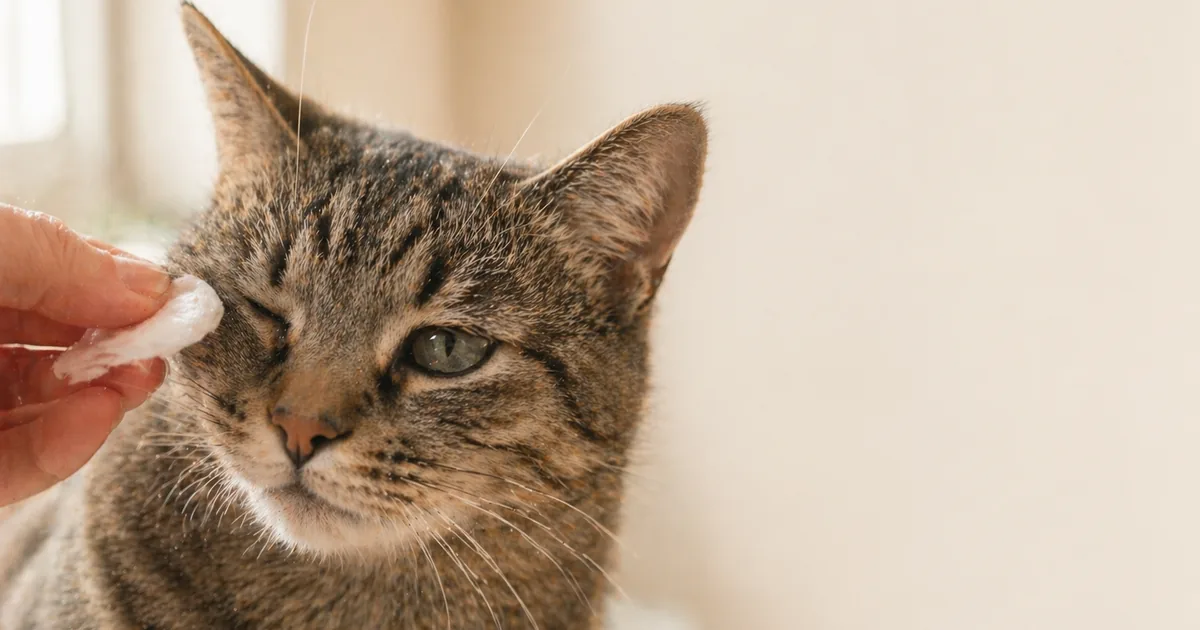
Eye discharge in a cat is almost never just "a bit goopy." It's almost always one of three clinical conditions — each with different urgency, treatment, and long-term implications. Getting the right one matters because the wrong treatment can make feline eye disease much worse.
The three common culprits
1. Feline upper respiratory infection (URI)
Presentation: watery then mucopurulent (yellow/green) discharge from one or both eyes, with nasal discharge, sneezing, reduced appetite, possibly fever. Cats often squint.
Cause: most commonly feline herpesvirus (FHV-1) or calicivirus, sometimes bacterial (Chlamydophila, Mycoplasma, Bordetella).
Urgency: vet visit within 24–48 hours. Supportive care plus antiviral/antibiotic eye drops.
2. Corneal ulcer
Presentation: one eye, squinting shut (sometimes completely), excessive tearing, visible haze on the cornea, pain (cat rubs eye or avoids light). No sneezing.
Cause: trauma (cat scratch, plant matter, self-rubbing), FHV-1 reactivation, dry eye, or secondary bacterial infection.
Urgency: same-day vet visit. Corneal ulcers can deepen rapidly and lead to perforation.
3. Feline herpesvirus flare (FHV-1)
Presentation: typically one eye, chronic or recurrent, mild-to-moderate discharge, squinting, often recurs under stress. Most cats are exposed in kittenhood and carry the virus for life.
Urgency: vet visit within a few days. Chronic cases benefit from lysine supplementation and stress reduction.
Key detail: FHV-1 can cause dendritic corneal ulcers with a characteristic branching shape — visible only with fluorescein stain at the vet.
Quick differentiation guide
| Sign | URI | Corneal ulcer | FHV-1 flare |
|---|---|---|---|
| One or both eyes | Often both | One | One |
| Sneezing | Yes | No | Sometimes |
| Squinting | Mild/moderate | Severe | Moderate |
| Discharge | Yellow/green mucopurulent | Often watery | Watery to yellow |
| Pain level | Moderate | High | Moderate |
| Recurrence | Acute | One event | Chronic/recurrent |
Don't-miss causes
- Glaucoma — enlarged eye, severe pain, vision loss. Emergency.
- Uveitis — often secondary to FIP, FeLV, FIV, toxoplasmosis.
- Foreign body — severe squinting, usually one eye. Same-day vet.
- Tear duct blockage — chronic watery discharge. Brachycephalic breeds prone.
- Entropion (inward-rolled eyelid) — chronic irritation.
- Eyelid tumor — older cats, visible lump.
- Eye visibly bulging or enlarged
- Eye looks sunken or smaller than the other
- Significant blood from the eye
- Cat won't open the eye and it's getting worse by the hour
- Visible foreign object on or in the eye
- Pupil fixed (non-responsive to light change)
- Trauma to head or face
- Kitten with both eyes gummed shut and not eating
What you can do at home (while waiting)
- Gently wipe discharge with a warm, damp cotton pad
- Use a separate pad per eye
- Do NOT use human eye drops or saline contact solutions
- Do NOT flush with hydrogen peroxide or alcohol
- Keep other pets separate (herpesvirus and chlamydia are contagious)
- Reduce stress
What your vet will likely check
A vet will often use fluorescein stain to look for corneal ulcers, check the eyelids for entropion or foreign material, and examine the cornea for cloudiness or scratches. If respiratory signs are present, they may treat the eye and the upper respiratory infection together.
Bring a photo timeline if the discharge changed color. Clear discharge that becomes yellow-green, one-eye squinting that worsens over hours, or discharge paired with not eating are all stronger signals than "goopy eye" alone.
When to isolate from other cats
If sneezing, nasal discharge, or both eyes are involved, keep the cat separate from housemates until the vet advises otherwise. Feline herpesvirus and calicivirus are common in multi-cat homes and shelters. Separate bowls, towels, and bedding reduce spread while you wait for care.
For single-eye trauma without sneezing, contagion is less likely, but pain can still be urgent. A cat holding one eye closed should not wait several days.
Triage your cat in under 60 seconds
Not sure if this is an emergency? CatMD runs feline-specific triage on symptoms or photos and returns a 0–99 health score with urgency tier, differentials, and a vet-ready summary.
Get the app