Cat Sneezing: URI, Allergies, or Something Worse?
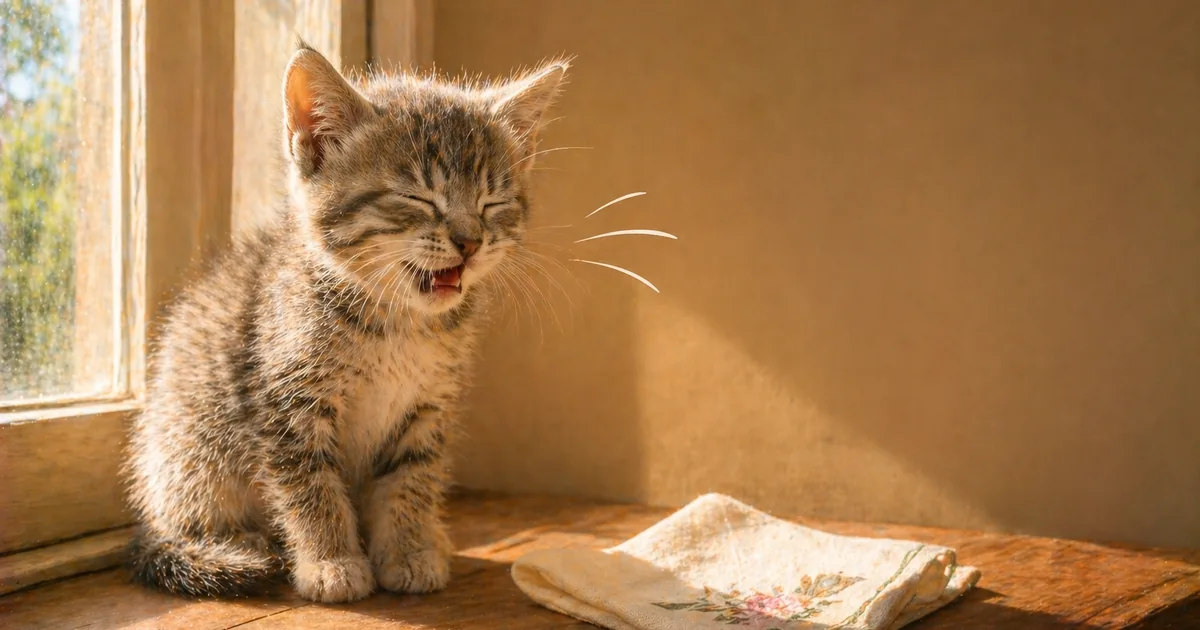
A cat that sneezes a few times a day is almost always fine. But sneezing is also one of the most-missed early signs of upper respiratory infection, dental disease, and (in older cats) nasal tumors. The decision isn't "is sneezing bad" — it's "what kind of sneezing is this, and what comes with it?"
The quick decision chart
| What you're seeing | Urgency |
|---|---|
| Sneezing + open-mouth breathing or labored breathing | Emergency vet now |
| Sneezing + lethargy + not eating > 24h | Vet within 24 hours |
| Sneezing blood (epistaxis), even once | Vet within 24 hours |
| Sudden violent sneezing fits, pawing at face/nose | Vet within 24 hours — possible foreign body |
| Sneezing + thick yellow/green nasal discharge | Vet within 2–3 days |
| Sneezing + eye discharge in a kitten or new-adopted cat | Vet within 2–3 days |
| One-sided nasal discharge, especially in a senior cat | Vet within 1 week |
| Occasional clear sneezing, otherwise totally normal | Monitor at home |
The "single sneeze" vs. "cluster sneeze" rule
Veterinary nose-watchers categorize sneezing in two patterns:
- Isolated sneezes spread through the day, with the cat otherwise normal — usually dust, perfume, litter, a stray hair. Self-limiting.
- Cluster sneezing — three, five, ten sneezes in a row, sometimes with the cat shaking its head or pawing at its nose. This pattern is unusual and worth attention. Triggers include foreign bodies (grass blade, foxtail), polyps, severe rhinitis flares, or the early phase of a URI.
The common causes (ordered roughly by frequency)
1. Upper respiratory infection (URI)
The classic cat cold. Feline herpesvirus (FHV-1) and feline calicivirus (FCV) account for the vast majority. Less commonly: Chlamydia felis, Mycoplasma, Bordetella.
Typical picture: sneezing, watery eye discharge that may turn yellow/green, congested breathing, sometimes a hoarse meow, often a fever and reduced appetite. Kittens, shelter cats, and recent adoptions are highest risk. Most uncomplicated URIs resolve in 7–14 days, but herpesvirus stays latent for life and flares with stress.
Action: vet visit if not eating, lethargic, or signs persist beyond a week. Vets may prescribe antibiotics (for bacterial overlay), antivirals (famciclovir for severe herpes), or supportive care like steam therapy and L-lysine.
2. Allergies (less common in cats than in dogs)
Cats can be allergic to dust, pollen, mold, cigarette smoke, scented litter, and household sprays. Unlike URI, allergic sneezing is typically:
- Bilateral (both nostrils)
- Clear nasal discharge — never thick yellow/green
- No fever, no appetite change
- Often seasonal or tied to a specific room
Action: remove the suspected trigger (try unscented dust-free litter, no aerosols, HEPA filter). Persistent cases need a vet to rule out other causes and possibly try a short steroid course.
3. Foreign body in the nasal cavity
A blade of grass, foxtail awn, or seed lodged in the nasal passage. Hallmark presentation: sudden onset, violent cluster sneezing, sometimes with a small amount of blood, and the cat pawing at the affected side of the face. Usually one-sided.
Action: vet within 24 hours. Removal is straightforward under sedation; left in place, the foreign body causes chronic infection.
4. Dental disease — especially upper carnassial tooth root abscess
An overlooked cause. The roots of the upper premolars and canines sit just below the floor of the nasal cavity. An abscessed root can drain into the nose, producing chronic one-sided sneezing and discharge with no respiratory cause. Classic in cats over 7.
Action: a vet exam plus dental X-rays. Extraction of the affected tooth often resolves the sneezing completely.
5. Nasal polyps (especially young to middle-aged cats)
Benign growths from the eustachian tube or middle ear. Cause one-sided nasal discharge, sneezing, and sometimes a change in voice or head tilt. More common in cats under 5.
Action: diagnosis via sedated exam or imaging; treatment is removal (traction or surgery).
6. Chronic rhinitis / "stuffy cat" syndrome
Often a long-term consequence of severe early-life URI. Permanent damage to nasal turbinates leaves the cat with lifelong intermittent sneezing and congestion. Manageable, not curable.
7. Nasal tumor (older cats)
The reason "one-sided discharge in a senior cat" is on every red-flag list. Adenocarcinoma and lymphoma are the most common feline nasal tumors. Presentation: progressive one-sided discharge that doesn't respond to antibiotics, sometimes blood, sometimes a visible facial bulge over weeks.
Action: any senior cat with persistent one-sided nasal signs needs imaging (CT or MRI) and a biopsy. Lymphoma in particular responds well to chemotherapy when caught early.
8. Fungal infection (cryptococcus, aspergillus)
Less common but serious. Often presents as a firm swelling over the bridge of the nose, chronic one-sided discharge, and sometimes neurological signs. Diagnosis via culture or cytology; treatment is months of antifungal medication.
What to document before the vet visit
- How long sneezing has been happening (days, weeks, months)
- One side or both — look at which nostril is wet
- Discharge color: none / clear / yellow / green / bloody
- Other symptoms: eye discharge, appetite, energy, weight, breathing pattern at rest
- Pattern: constant, after meals, in one room, when you use a particular spray
- History: recent adoption, contact with other cats, outdoor access, vaccination status
- Age: kitten / young adult / senior — changes the differential dramatically
- Sneezing blood, even a small amount
- Difficulty breathing, open-mouth breathing, or breathing fast at rest
- Cat has stopped eating for 24+ hours (URI plus anorexia is a faster spiral than people expect)
- One-sided nasal discharge in a senior cat that has lasted > 2 weeks
- Sudden violent sneezing with pawing at the face
- Visible facial swelling, asymmetry, or a bulge above the nose
- Pale or blue gums during a sneezing episode
What you can do at home (when it's mild)
- Run a humidifier or take the cat into a steamy bathroom for 10–15 minutes once or twice a day
- Switch to unscented, low-dust litter
- Wipe the nose and eyes gently with a damp cotton pad
- Encourage eating with warmed-up wet food (smell drives appetite — congestion kills it)
- Reduce household stress; herpesvirus flares track stress closely
Anything that doesn't resolve in a week, or that comes with the red flags above, isn't a "wait-and-see." A 15-minute vet exam usually sorts URI, foreign body, and dental causes apart in one visit.
Frequently asked questions
Why is my cat sneezing?
Most cat sneezing is benign — dust, perfume, scented litter, or mild allergies. The most common medical cause is upper respiratory infection (URI), typically from feline herpesvirus or calicivirus. Less common causes include foreign body in the nasal cavity, dental disease (especially upper carnassial root abscess), nasal polyps, chronic rhinitis, or — in older cats — nasal tumors.
When should I take my cat to the vet for sneezing?
Same-day vet for: sneezing blood (epistaxis), breathing difficulty, sneezing with not eating for 24+ hours, violent cluster sneezing with face-pawing (suggests foreign body), or visible facial swelling or asymmetry. Within 1 week: persistent one-sided nasal discharge in a senior cat (rule out tumor) or thick yellow/green discharge that does not respond to home care.
Can cats catch colds from humans?
No. Cat upper respiratory infections are caused by feline-specific viruses (herpesvirus, calicivirus) and bacteria (Chlamydia felis, Mycoplasma) that do not spread to humans. Cats catch URIs from other cats, especially in shelters, breeders, or multi-cat households.
How long does cat sneezing last?
A typical uncomplicated URI resolves in 7–14 days. Persistent sneezing beyond two weeks, especially one-sided, warrants further investigation — could be chronic rhinitis (often a long-term consequence of severe early-life URI), a foreign body, polyp, or tumor. Herpesvirus stays latent for life and can flare with stress.
Triage your cat in under 60 seconds
Not sure if this is an emergency? CatMD runs feline-specific triage on symptoms or photos and returns a 0–99 health score with urgency tier, differentials, and a vet-ready summary.
Get the app