Cat Litter Box Changes: What They Mean
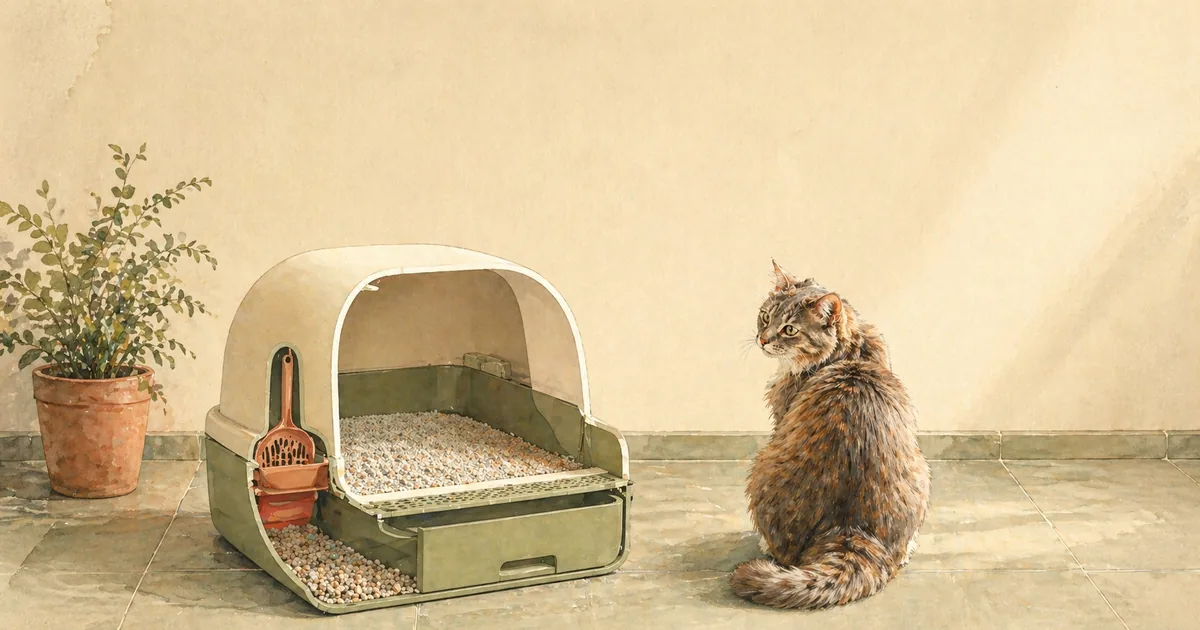
The litter box is the single most underrated diagnostic tool in feline health. Changes in frequency, volume, consistency, or color almost always precede visible illness. Learning to read the signals can add years to your cat's life.
What "normal" looks like
| Variable | Normal |
|---|---|
| Urination frequency | 2–4 times per day |
| Clump size | 2–3 tablespoons each, consistent |
| Stool frequency | 1–2 times per day |
| Stool consistency | Firm but not rock-hard, easy to scoop, no mucus |
| Stool color | Medium to dark brown |
| Urine color | Pale yellow to amber, consistent |
| Litter box use | In the box, consistently |
Urinary changes
Large, frequent clumps (polyuria)
Cat is peeing more volume than usual. Almost always paired with polydipsia (increased drinking). Common causes:
- Chronic kidney disease (diluted urine, lost concentrating ability)
- Hyperthyroidism
- Diabetes mellitus
- Hypercalcemia
Action: vet visit within a week for senior cats; sooner if other signs present.
Small frequent clumps (pollakiuria)
Cat is making many short trips, possibly straining, possibly not producing much. Causes:
- FIC (feline idiopathic cystitis)
- Bladder stones
- UTI (less common than FIC in cats)
- Urethral obstruction (males — emergency)
Action: same-day vet, especially for males.
Pink, red, or orange urine
Blood in urine. Causes: FIC, bladder stones, UTI, urethral obstruction, trauma, kidney disease, cancer.
Action: vet visit within 24 hours. Bring a fresh urine sample if you can collect one.
Strong-smelling urine
A sudden sharp or sweet smell can indicate UTI, diabetes (sweet/fruity from ketones), or kidney disease.
Fecal changes
Diarrhea
Small-bowel diarrhea: large volume, few trips per day. Large-bowel diarrhea: small volume, frequent trips, mucus, sometimes fresh blood.
Acute causes: dietary change, parasite, infection, toxin. Chronic causes: IBD, lymphoma, food allergy, exocrine pancreatic insufficiency.
Constipation
Straining to defecate with no output or small hard pellets. Often paired with vomiting once the colon is distended.
Causes: dehydration (often secondary to CKD), megacolon, pelvic injury, hairballs.
Black, tarry stool (melena)
Digested blood from upper GI bleeding. Causes: ulcer, pancreatitis, hemangiosarcoma, tumor, severe parasite burden.
Action: same-day vet.
Pale or white stool
Indicates bile isn't reaching the intestines. Liver or biliary disease. Vet visit within 48 hours.
Behavioral changes
Going outside the box
First question: medical or behavioral?
- Medical causes: FIC, UTI, arthritis (painful to step into high-sided box), litter aversion from a previous painful experience.
- Behavioral causes: litter type preference, box cleanliness, location stress, number of cats vs. boxes (rule: N cats + 1 box), new pet/person.
Start with a vet visit to rule out medical. It's very often medical.
The N+1 rule
If you have N cats, you need N+1 litter boxes, in different locations. One cat can "block" another from a single box. Inadequate box count causes behavioral issues.
- Blood in urine
- Straining with no urine output (male especially)
- Black tarry stool
- Diarrhea with blood + hiding or lethargy
- No urination in 12+ hours
- No defecation in 3+ days with straining
- Dramatic increase in urine volume in a senior cat
Frequently asked questions
How often should a cat use the litter box?
Healthy cats typically urinate 2–4 times per day and defecate 1–2 times per day. Significant deviations from this baseline — much more or much less, larger or smaller clumps than usual, or sudden changes in stool consistency — warrant attention even if the cat seems otherwise normal.
Why is my cat peeing outside the litter box?
First rule out medical causes: feline idiopathic cystitis (FIC), UTI, urethral obstruction, arthritis (painful to step into a high-sided box), or a previous painful experience that created litter aversion. If medical is cleared, look at litter type preference, box cleanliness, location stress, or insufficient box count (rule of thumb: N cats + 1 box).
What does blood in cat urine mean?
Pink, red, or orange-tinted urine indicates blood. Causes include feline idiopathic cystitis (FIC), bladder stones, UTI, urethral obstruction (an emergency in male cats), trauma, kidney disease, or cancer. Any visible blood in urine warrants a vet visit within 24 hours, sooner if accompanied by straining or no urine output.
When is cat constipation an emergency?
A cat that has not defecated in 3+ days while showing straining behavior needs a vet visit, especially when accompanied by vomiting (a sign the colon is distended). Common causes include dehydration secondary to chronic kidney disease, megacolon, pelvic injury, or hairballs.
Triage your cat in under 60 seconds
Not sure if this is an emergency? CatMD runs feline-specific triage on symptoms or photos and returns a 0–99 health score with urgency tier, differentials, and a vet-ready summary.
Get the app