Senior Cat Care: 12 Changes After Age 10
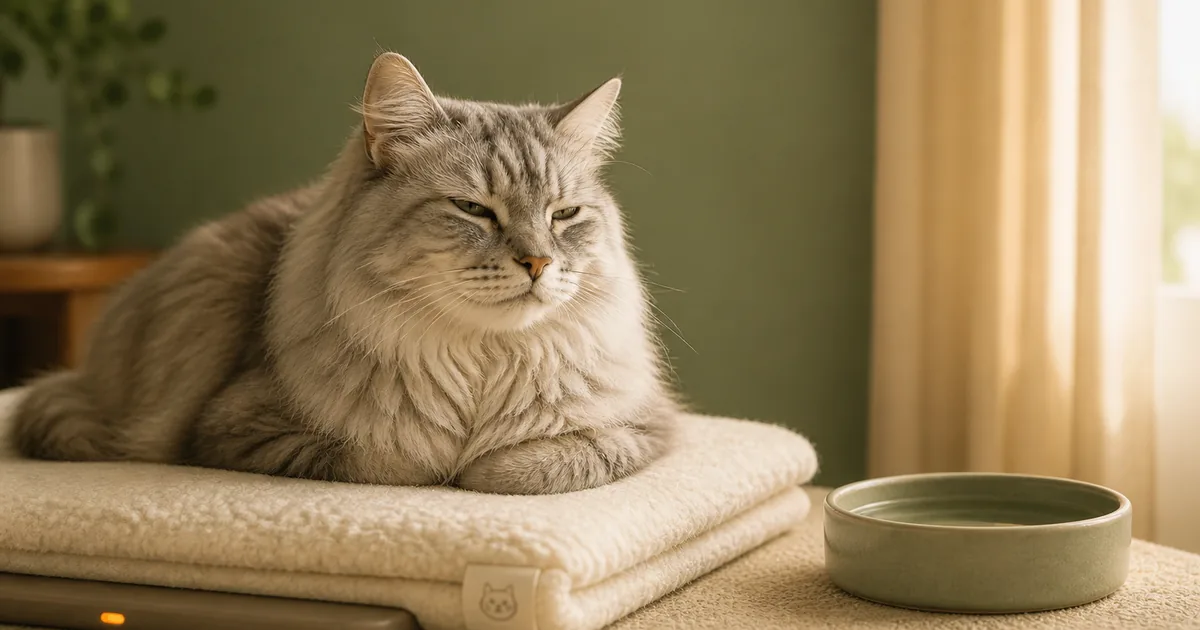
The cat in front of you at 12 is not the same cat at 5 — even when the personality and routines look identical. Their kidneys are working harder. Their thyroid is more likely to drift. Their joints have wear. Their gum line has receded. The disease landscape changes, and the symptoms hide in plain sight.
Senior cats don’t fall ill suddenly so much as they drift. The cat who was 5.0 kg at age 8 is 4.4 kg at age 11 — a 12% drop that nobody noticed because it happened over three years. That drift is often the only early signal of treatable disease. This guide is a map of what to watch for, with the cadence and environment changes that make age 10–year-old plus a thriving life-stage rather than a managed decline.
The 12 markers worth tracking
Weight
The single most useful number in senior cat health. Weigh monthly using a digital baby scale or by weighing yourself with and without the cat on a regular scale. Drift down >5% in 3 months is significant. Causes include hyperthyroidism (often paired with increased appetite), CKD, diabetes, dental pain, and cancer. For the full diagnostic workup — what each likely cause means and the minimum lab panel to ask for — see our guide on unexplained weight loss in cats.
Water intake
Increased thirst is one of the earliest signs of CKD and diabetes. Watch the water bowl — if it goes from "topping up every other day" to "topping up daily," that’s a flag. Some owners mark the level with a sticker for two weeks to quantify.
Litter-box patterns
Frequency, volume, and consistency of urine and stool are gold-standard organ markers. Bigger or more frequent urine clumps signal increased urine production (early CKD, hyperthyroidism, diabetes). Hard small stools suggest dehydration or constipation, common in seniors. Persistent diarrhoea after age 10 isn’t normal — vet workup.
Appetite and food preference
A cat who used to eat enthusiastically and now picks at food may have dental pain (very common in seniors), nausea (CKD, hyperthyroidism), or changing taste preferences from kidney disease. A cat who suddenly eats much more is often hyperthyroid.
Sleeping respiratory rate
Count breaths per minute while the cat is in deep sleep, ideally a few times a month. Normal: under 30. Persistently above 30, especially climbing month-over-month, is the gold-standard early signal of heart disease. The CatMD app has a built-in tap-per-breath SRR tracker; alternatively, a smartphone stopwatch and 30-second count works.
Mobility and grooming
Arthritis is dramatically under-diagnosed in cats — X-ray studies show ~90% of cats over 12 have radiographic evidence of joint disease, but only a fraction are diagnosed because cats don’t limp the way dogs do. Look for: reluctance to jump up to old favourite perches, jumping up but not jumping down, unkempt fur over the rump (the spot the cat can no longer reach to groom), and a stiff gait first thing in the morning.
Behavioural changes
New irritability, hiding more, or new clinginess can all signal pain or cognitive decline. Cats with feline cognitive dysfunction (FCD) may become disoriented, vocalise at night, miss the litter box despite no medical cause, and seem confused in familiar rooms. Pattern: it gets worse, not better, over months.
Coat condition
A senior cat’s coat tells you a lot. Greasy, matted, or unkempt coat is often grooming compromise from arthritis, dental pain, or systemic illness. A previously sleek cat with a dull coat warrants a vet check.
Vocalisation patterns
New, persistent night vocalisation in a senior cat is a flag. Causes include hyperthyroidism (restless, vocal), hypertension (sometimes blindness from retinal detachment, leading to disorientation), and FCD. None are "just getting old."
Eye changes
Some cloudiness in the lens after age 10 is normal (lenticular sclerosis, harmless). True cataracts (denser, white opacity) and sudden vision loss are not. Watch for the cat bumping into furniture, missing jumps, or sudden hesitation in dim rooms.
Lump checks
During grooming or petting, run hands over the cat’s body monthly. New firm lumps (especially under the skin or in the mammary chain of females) deserve a vet check. Most are benign; some aren’t. Catching them at "small and movable" matters.
Blood pressure (at the vet)
Hypertension is common in senior cats and frequently silent until catastrophic (sudden blindness from retinal detachment). Most feline-friendly practices now include blood pressure measurement at every senior wellness visit — ask if yours doesn’t.
The veterinary cadence that catches things early
- Every 6 months: physical exam, weight, body-condition score, dental check, blood pressure
- Annually: complete blood count, full chemistry panel, T4 (thyroid), urinalysis. Add SDMA (early kidney marker) once standard kidney values stay normal but you want extra sensitivity.
- As needed: chest X-rays if SRR climbs or murmur develops; echocardiogram for HCM-prone breeds (Maine Coon, Ragdoll, Sphynx, Persian)
Environment changes that make life easier
Litter boxes: switch to lower-sided boxes (5–7 cm rim height) so arthritic cats can step in without pain. Add at least one extra box on whichever floor the cat spends most time on; senior cats reduce travel distance, and a far-away box gets used less.
Food and water: wide shallow bowls (whisker-friendly, no neck flexion required). Keep a water station near where the cat sleeps — senior cats drink less if walking to water is effortful, which compounds dehydration.
Sleeping spots: add a heated bed (low-temperature, pet-safe) in a cool spot. Senior cats lose thermoregulation reserves and seek warmth more. Pad hard floors near favourite spots.
Mobility: ramps or steps to favourite perches the cat can no longer jump to. Window perches at low-jump height. Avoid slippery hardwood without rugs — traction matters as joints stiffen.
Light and orientation: small night lights in hallways and near litter boxes for cats with reduced vision or early FCD. Keeping furniture in stable positions matters more for older cats than younger ones.
Pain management is the under-rated upgrade
The biggest single intervention in senior cat life quality is multimodal arthritis pain management. Modern options include monoclonal antibody injections (frunevetmab, given monthly at the vet), gabapentin, and joint supplements. Many "just getting old" cats become genuinely playful again within weeks of starting pain management. Talk to your vet — don’t accept stiffness as inevitable.
What this changes
The combination of monthly weight checks, alert observation of the 12 markers, and a 6-month vet cadence catches most senior cat disease at "treatable" rather than "managed decline." Cats today routinely live to 16–20 with good senior care, and many of those years can be active and engaged — not just survival, but a real third act.
The frame is not "managing my old cat’s decline." It’s "running a careful surveillance program so I notice the things that hide." Cats earned that surveillance with their famous opacity. We can give it back to them.
Frequently asked questions
When does a cat become "senior"?
AAFP/ISFM life-stage guidelines call age 10–14 "senior" and 15+ "geriatric" (sometimes "super-senior"). The shift at 10 isn’t a hard biological line — it’s the age where the prevalence of treatable age-associated diseases (CKD, hyperthyroidism, dental disease, arthritis, cancer) rises sharply enough that screening pays off. Many cats at 10 are still vigorous; the goal is to catch problems while still treatable, not to act old.
How often should senior cats see the vet?
Every 6 months for a physical exam, with annual baseline bloodwork (complete blood count, chemistry, T4 thyroid, urinalysis). The 6-month cadence matters because cats can drift through significant disease in 12 months — senior cats can lose 15% of their body weight before the owner notices. Twice-yearly weight checks alone catch a lot of disease early.
My senior cat is "just slowing down" — is that normal aging or a problem?
"Just slowing down" is one of the most over-used explanations for treatable senior cat disease. Most "slowing down" is arthritis (which is under-diagnosed in cats and very treatable with modern multimodal pain management), hyperthyroidism (which causes restlessness in early stages, then fatigue as it advances), CKD, dental pain, or hypertension. Don’t assume normal aging — a vet visit and bloodwork can usually distinguish.
What environmental changes help an older cat?
Lower-sided litter boxes (easier to step into with arthritis), heated beds in cool spots, shallow wide food and water bowls (whisker-friendly, less neck flexion), ramps or steps to favorite perches, night lights for cats with vision changes, and softer bedding on hard floors. Most senior cats benefit from these changes well before obvious mobility issues appear.
Triage your cat in under 60 seconds
Not sure if this is an emergency? CatMD runs feline-specific triage on symptoms or photos and returns a 0–99 health score with urgency tier, differentials, and a vet-ready summary.
Get the app