Cat Pain Check: How the Feline Grimace Scale Reads What Your Cat Hides
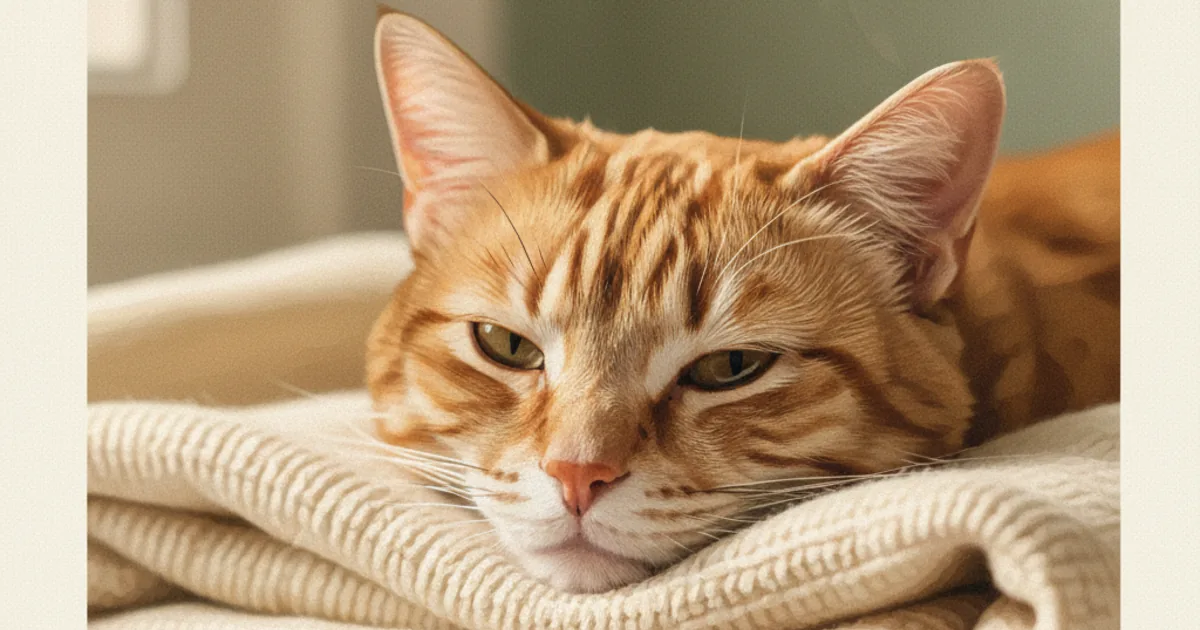
Cats hide pain. This is not a personality trait — it's an evolutionary feature. Wild cats that displayed pain attracted predators, so the species selected hard for behavioural pain masking. Domestic cats inherited this. By the time you can see your cat is in pain from how they move or behave, the underlying problem is usually advanced.
The face is the exception. The muscles around the eyes, muzzle, ears, and whiskers reflect pain involuntarily and almost continuously. They cannot mask it. The Feline Grimace Scale (FGS) is the peer-reviewed pain-scoring system that reads exactly these involuntary facial signals — and it's the scale vets use during recovery monitoring after surgery. Now it's usable from a single photo at home.
The science behind the scale
The FGS was developed and validated by Marina Evangelista and colleagues at the University of Montreal's Faculty of Veterinary Medicine. The validation paper — Facial expressions of pain in cats: the development and validation of a Feline Grimace Scale, published in Scientific Reports in 2019 — established that:
- Five facial action units reliably reflect pain state in cats: ear position, orbital tightening (squinting), muzzle tension, whiskers position, and head position.
- Each unit scores 0 (no pain expression), 1 (moderate), or 2 (marked) — composite 0-10.
- Inter-rater reliability between trained observers is high (intraclass correlation > 0.85), meaning two trained people scoring the same cat tend to agree.
- The scale predicts response to analgesia: cats above the threshold who got pain medication scored down; cats above threshold without medication did not.
Subsequent validation work has extended the FGS to chronic pain (osteoarthritis monitoring), peri-operative monitoring, and acute injury contexts. It is the single most-validated cat pain scale in current veterinary use.
The five facial action units — what to look for
1. Ear position
- 0 — no pain: ears facing forward, normal natural orientation.
- 1 — moderate: ears slightly flattened sideways ("airplane ears").
- 2 — marked: ears pinned back hard against the head.
2. Orbital tightening (eye squint)
- 0: eyes fully open, normal almond shape.
- 1: eyes partially closed, narrowed.
- 2: eyes squeezed shut or near-closed.
3. Muzzle tension
- 0: muzzle relaxed, rounded shape.
- 1: muzzle slightly tensed, mildly elongated.
- 2: muzzle pulled tight, clearly elongated, "pointed".
4. Whiskers position
- 0: whiskers loose, curving outward in normal arc.
- 1: whiskers stiff, straighter than normal.
- 2: whiskers stiff and pulled forward.
5. Head position
- 0: head above shoulder line, level.
- 1: head aligned with shoulders.
- 2: head below shoulders, hunched downward.
How to read the composite
Sum the five scores. The threshold from Evangelista's validation:
- 0-3: minimal pain expression. No intervention needed beyond routine.
- 4-6: moderate pain expression. Vet examination warranted within 24-48 hours. After surgery, this is the threshold for additional analgesia.
- 7-10: severe pain expression. Vet attention should be prompt. After surgery, this signals inadequate pain control.
The 4/10 threshold is the actionable number. Below it, watchful waiting is reasonable; at or above, the cat is signalling discomfort that warrants investigation. The companion piece on the broader is-my-cat-sick checklist covers how the FGS fits into the wider triage flow.
When the FGS is most useful
Post-operative monitoring (highest-validated use case)
The original use case the scale was developed for. After dental work, spay/neuter, or any surgery, cats often come home with prescribed pain medication. The FGS tells you whether the meds are working: scoring 0-3 means yes; scoring 4+ means call the vet for adjustment. This is the use case where AI photo scoring at home most directly substitutes for vet recovery checks.
Senior cats with suspected chronic pain
Osteoarthritis is dramatically under-diagnosed in cats — by some estimates, 60-90% of cats over 12 have radiographic evidence of joint disease, but most never get diagnosed because the pain expression is subtle and gradual. A baseline FGS done quarterly catches the trend. A senior cat that scored 1/10 last quarter and 4/10 this quarter has something new going on.
Suspected acute injury
Cat suddenly hiding, limping, or refusing to jump? Photograph the face at a consistent angle. A composite 4+ confirms there is real pain even if you can't see what hurts. The vet then localises the cause via palpation, imaging, or both.
Photo conditions for accurate at-home scoring
The AI version of the FGS is only as good as the photo. To get a reliable read:
- Face in clear view — front-on or slight angle, the cat's face not turned away or obscured.
- Even soft lighting — diffused window light is ideal. Avoid harsh overhead lamps that cast deep shadows on the muzzle.
- Cat at rest — not actively grooming, eating, or playing. Wait for a quiet moment.
- One photo, not a burst — pick the most representative frame. Not the grumpy split-second of a yawn, not the moment of a sneeze.
If the AI score doesn't match what you see in the cat's overall behaviour, take a second photo at a slightly different angle and re-score. Two consistent reads in the 4+ range is more reliable than one outlier.
What the FGS is not
Three honest framings worth restating.
First, the FGS is a behavioural observation, not a diagnosis. A 6/10 score tells you the cat is in pain. It does not tell you why. The vet identifies the cause via examination + imaging + bloodwork.
Second, the FGS doesn't replace physical examination for acute injury. A vet palpating the abdomen will catch things — guarding, rebound tenderness, point pain — that no facial photo can show. For acute injury or sudden severe symptoms, the FGS is supplementary, not substitute.
Third, AI scoring is most reliable when the input photo follows the conditions above. A blurry, dim, or angled photo gives an unreliable score in either direction. When in doubt, score with the original Evangelista photo guide visible and compare your eye against the AI output.
What this changes day-to-day
Two practical shifts. After any surgery or dental work, you have a recovery monitoring tool that previously only existed in vet hospitals. After age 10, you have an early-warning system for the chronic pain that typically goes unnoticed until cats lose so much function that the family attributes it to "she's old now." The FGS catches it weeks or months earlier — often when treatment (anti-inflammatories, joint supplements, environmental adjustments) can still meaningfully reverse the pain trajectory.
Cats hide pain because they evolved to. The face is the one channel they cannot mask. Reading it is the highest-leverage skill any senior-cat owner can have.
Frequently asked questions
What is the Feline Grimace Scale?
A research-validated facial pain-scoring system developed by Evangelista et al at the University of Montreal (Scientific Reports, 2019). It scores five facial action units — ear position, orbital tightening, muzzle tension, whiskers, head position — each 0, 1, or 2, for a composite 0-10. Validated against acute pain, chronic pain, and post-operative pain. It's the actual scale veterinarians use during recovery monitoring after surgery, now usable from a single photo at home via AI scoring.
Why can't I just tell when my cat is in pain?
Because cats are prey animals — they evolved to hide pain. Visible pain signals would attract predators in the wild, so the species selected for behavioural masking that persists in domestic cats. By the time pain is obvious in posture or behaviour, it's usually severe and longstanding. The face is the exception: the muscles around the eyes, muzzle, and ears reflect pain involuntarily and almost continuously. The FGS exploits this — it reads what the cat cannot consciously control.
What FGS score should make me call the vet?
Composite 4/10 or higher = consider vet examination. The original Evangelista validation found 4 was the threshold above which post-operative cats reliably benefited from additional analgesia. Below 4, watchful waiting is reasonable. Above 4, the cat is signalling discomfort that warrants investigation. As always: a high FGS is a behavioural observation, not a diagnosis. The vet identifies the cause via examination + (often) imaging or bloodwork.
When is the FGS especially useful?
Three highest-leverage situations. (1) After surgery or dental work — recovery monitoring at home, especially in the first 48-72 hours. (2) Senior or arthritic cats — chronic pain often goes uncaught for months because the cat just "slows down" gradually; FGS catches the underlying pain. (3) Suspected acute injury — cat that suddenly hides, limps, or stops jumping. For all three, photographing the face at a consistent angle in even light gives a reliable reading.
How does the AI version compare to vets doing FGS by eye?
Evangelista's validation found inter-rater reliability between trained vets was high (intraclass correlation > 0.85). AI scoring of the same five action units from a single clear photo achieves accuracy in the same range when the photo is well-framed (face visible, even lighting, no obstructions). The honest framing: a vet doing a physical exam with palpation will catch things a photo cannot — guarding behaviour, point tenderness, postural pain. The AI FGS is for trends and at-home monitoring, not as a substitute for veterinary examination.
Triage your cat in under 60 seconds
Not sure if this is an emergency? CatMD runs feline-specific triage on symptoms or photos and returns a 0–99 health score with urgency tier, differentials, and a vet-ready summary.
Get the app