The Feline Five — the science of cat personality
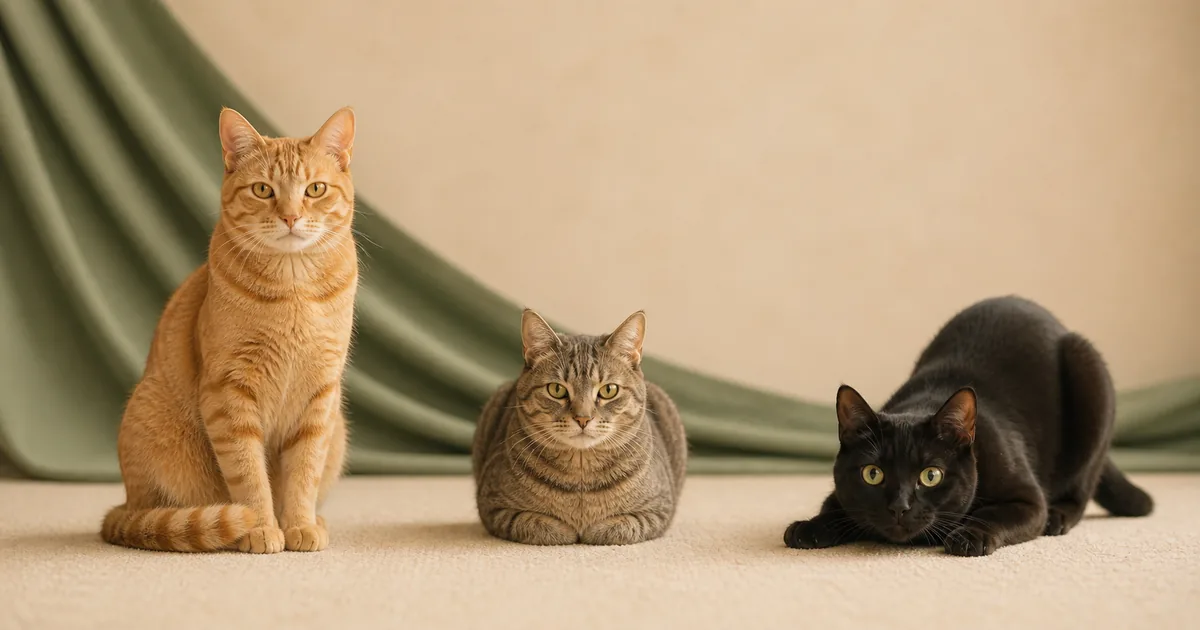
For decades, cat personality was treated as folk science — a thing every cat owner believed in but no researcher quantified. That’s changed. The 2017 Litchfield et al. study (The "Feline Five": An Examination of Personality in the Domestic Cat, PLoS One) surveyed over 2,800 cat owners and identified five replicable personality traits. Together they form the strongest scientific framework we have for understanding why cats are so individually different. (For the practical-walkthrough version of this framework with all 9 archetypes side-by-side, see our blog: Every Cat Personality Type Explained.)
This guide walks through the five traits, the archetypes that emerge from common combinations, and what each one means for how to live with your cat.
The five traits
1. Skittishness (anxious vs calm)
How easily and how strongly a cat reacts to novel or surprising events. High-skittishness cats startle easily, hide longer after disruptions, and take more time to acclimate to new people. Low-skittishness cats are emotionally stable and bounce back quickly.
2. Outgoingness (sociable vs reserved)
How actively a cat seeks social interaction — with humans, other cats, and visitors. High-outgoing cats greet strangers, follow owners room-to-room, and lap-sit. Low-outgoing cats are independent, may prefer solitude, and form deep bonds with one or two specific humans.
3. Dominance (assertive vs submissive)
How much a cat asserts itself in resource conflicts. High-dominance cats guard food, claim sleeping spots, and are likely to bully more submissive cats in multi-cat homes. Low-dominance cats yield resources and avoid confrontation.
4. Spontaneity (impulsive vs predictable)
How much a cat does abrupt, unpredictable things. High-spontaneity cats have sudden zoomies, surprise pounces, and shifting moods. Low-spontaneity cats are routine-loving and behaviourally consistent across days.
5. Friendliness (affectionate vs aloof)
How affectionate a cat is once a relationship is established. High-friendliness cats seek physical contact, purr readily, and tolerate handling. Low-friendliness cats may live happily alongside their humans without seeking touch.
The archetypes
Specific combinations of the five traits produce recognisable types. Most cats fit one or another loosely; some don’t fit any cleanly. Use these as a starting framework, not a rigid box.
Confident-Sociable
High outgoingness, low skittishness, moderate dominance. The cat that meets every visitor at the door. Adapts well to new environments, multi-cat homes, and travel. Common in Sphynx, Bengals, Maine Coons. Lifestyle implications: needs daily interaction, does poorly when left alone for long workdays, often benefits from a feline companion.
Curious-Introvert
Moderate outgoingness, low-moderate skittishness, low dominance. Confident in their own home but reserved with strangers. Tend to be quietly curious, exploring on their own terms. Common in Russian Blues. Lifestyle implications: thrive on routine, do better in quiet households, need a designated safe-room during gatherings.
Anxious-Sensitive
High skittishness, low outgoingness, low dominance. Easily overwhelmed; takes weeks to settle into new environments. Often the result of inadequate kitten socialisation, but also common in some genetic lines. Lifestyle implications: stable schedules, predictable handling, environmental enrichment focused on hiding spots and elevated perches. Avoid loud households, frequent guests, and forceful introductions.
Hunter-Athlete
High spontaneity, low skittishness, high outgoingness. Athletic, focused, prey-driven. Wand toys are a non-negotiable daily ritual. Common in Bengals, Abyssinians, Savannahs. Lifestyle implications: provide intense daily play (15–20 minutes wand-toy), food puzzles, vertical territory, and ideally a catio or harness-walk option.
Affectionate-Lap
High friendliness, high outgoingness, low dominance. The classic lap cat — seeks physical contact, purrs at the slightest touch, sleeps on the bed. Common in Ragdolls, Birmans, Scottish Folds. Lifestyle implications: thrive on close human contact; do badly when left alone for extended periods. Excellent with children if children are gentle.
Velcro-Cat
Extreme high outgoingness, high friendliness, high attachment. The cat that follows you to the bathroom. Common in Sphynx and many Oriental breeds. Lifestyle implications: separation distress is a real risk; consider a companion cat. Often vocalise more than average.
Skittish-Sensitive
High skittishness, low outgoingness, moderate friendliness with bonded humans only. Slow to trust, deeply bonded once trust forms. Common in Russian Blues with poor socialisation history, and in some rescue cats. Lifestyle implications: respect their pace, never force interaction, expect 6–12 months for full bonding.
Cool-Observer
Low outgoingness, low skittishness, low spontaneity. Watches everything, reacts to little. The cat-shaped equivalent of a long-time housemate who likes you but doesn’t want to be picked up. Common in British Shorthairs. Lifestyle implications: don’t take their reserve personally; affection comes on their terms.
Goofball-Playful
High spontaneity, high outgoingness, high friendliness, low dominance. The class clown. Knocks things off tables on purpose, plays fetch, gets into harmless mischief. Often common in Domestic Shorthairs. Lifestyle implications: enrichment is crucial; bored Goofballs become destructive Goofballs.
Personality plus breed
Breed creates statistical tendencies but doesn’t guarantee an archetype. Selective breeding shapes baseline traits over generations, which is why breed personality profiles exist. But within any breed, individual variation is large.
Use breed as a prior when you adopt: a Bengal kitten is statistically more likely to be high-spontaneity and high-energy than a British Shorthair kitten. But by 6 months, the individual cat in front of you has corrected the breed prior with their own data. Read the cat, not the label.
What this changes
Knowing your cat’s archetype reframes everything. A Skittish-Sensitive cat that hides under the bed when guests come isn’t broken — it’s being a Skittish-Sensitive cat correctly. The work is to build the environment that lets that personality thrive: hides, height, quiet, predictability.
An Affectionate-Lap cat left alone for 12-hour workdays isn’t happy with its own company — it’s suffering from a mismatch between its personality and its life. The fix is a companion cat, a midday visitor, or a job change. (For the rituals that actually deepen a cat-human bond, see our guide on how to bond with your cat properly.)
And a Hunter-Athlete in a small apartment with no daily play and no vertical territory will turn its energy into furniture destruction — not from spite but from a genuinely unmet need. The fix is wand toys and catification, not punishment.
Personality is descriptive, not normative. There’s no "good" or "bad" cat personality — there are only environments that match or mismatch the personality you have. The Feline Five framework lets you stop fighting your cat’s nature and start designing around it.
Frequently asked questions
Can a cat’s personality change over its life?
Mostly no. The Feline Five traits are stable across adulthood, and a cat’s archetype at age 2 generally holds at age 12. What CAN change: a previously confident cat that becomes skittish often has a medical reason (pain, hyperthyroidism, cognitive dysfunction in seniors), and a previously skittish cat that gradually becomes more sociable usually had inadequate socialisation as a kitten and is gaining confidence with a stable home. Sudden personality changes deserve a vet visit.
How early can I tell my kitten’s personality?
Useful signals appear by 8–12 weeks; the trait baselines are largely set by 16 weeks. The 2–7 week socialisation window is when environmental experience most shapes outgoingness and skittishness — a kitten exposed to handling, noise, and other animals during that window will be a more confident adult. After 16 weeks, the personality you see is roughly the personality you’ll have.
Is breed personality real or just stereotype?
It’s real, but it’s a tendency, not a guarantee. Breed selection over generations has shaped behavioural baselines: Sphynx tend toward high outgoingness and friendliness, British Shorthairs toward low outgoingness and high stability, Bengals toward high spontaneity and dominance. But individual variation within breeds is wide. A Bengal can be a velcro lap cat; a Persian can be active and adventurous. Use breed personality as a starting prior; let the individual cat correct it.
How can I tell if two cats will get along before adopting?
Match on activity level and dominance, not on breed or look. Two high-dominance cats will compete for territory; two low-activity calm cats will coexist quietly; a high-spontaneity cat paired with a skittish cat is a recipe for chronic stress. The single best predictor of multi-cat harmony is whether each cat’s "good day" looks like the other’s "good day."
What do I do if my cat is "skittish-sensitive"?
Three things. First, environmental stability — minimise schedule shifts, frequent guests, and disruptive sounds. Second, give them refuge — elevated hides and quiet rooms they can retreat to. Third, never force handling — let them initiate every interaction. Skittish cats can become deeply affectionate over months once trust builds; the path is patience, not exposure therapy.
Triage your cat in under 60 seconds
Not sure if this is an emergency? CatMD runs feline-specific triage on symptoms or photos and returns a 0–99 health score with urgency tier, differentials, and a vet-ready summary.
Get the app