Kitten development — the windows that matter most
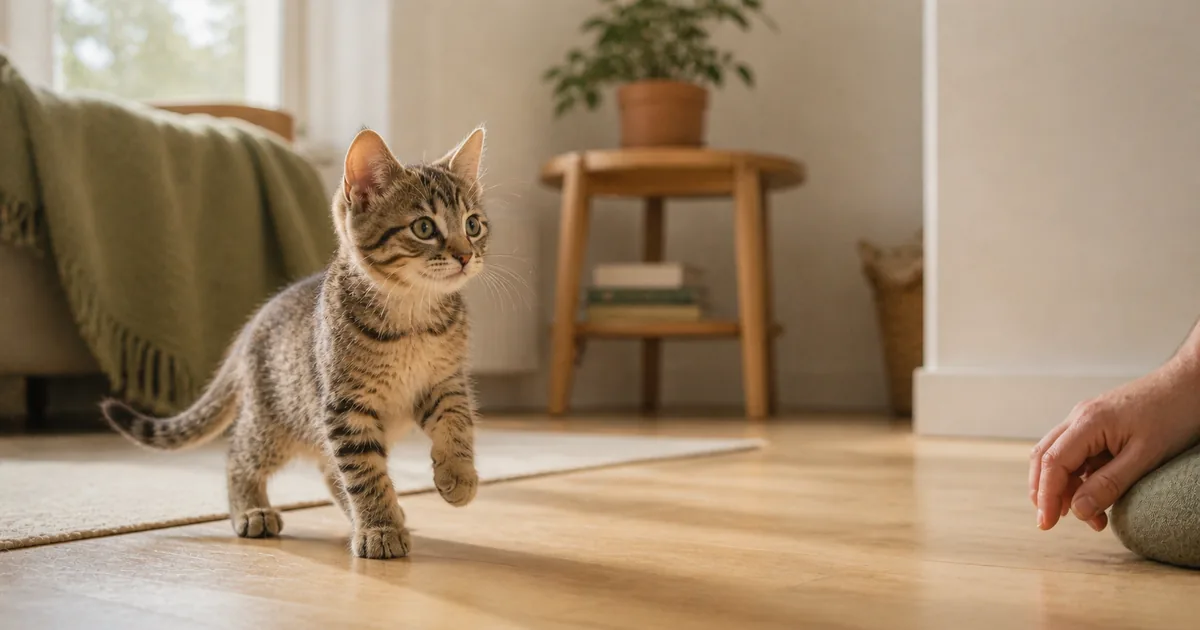
The first 16 weeks of a kitten’s life shape who they will be for the next 18 years. The personality archetype your future adult cat falls into, how they handle visitors and vet visits, whether they tolerate handling, whether they form deep bonds easily — all of these are heavily set during a critical window most owners don’t even know exists.
This guide walks through kitten development month-by-month, with emphasis on the 2-7 week socialisation window (the one that matters most) and what owners receiving a kitten at 12+ weeks can still do to shape outcomes.
The biggest single fact: the 2-7 week socialisation window
Between approximately 2 and 7 weeks of age, kittens form lifelong baseline expectations about the world. Specifically:
- What humans look, sound, smell, and feel like
- Whether handling is safe
- Whether household sounds (vacuums, doorbells, children, TVs) are normal or threatening
- Whether other species (dogs, other cats outside the litter) are safe
- Whether varied surfaces (grass, hardwood, carpet, tile, gravel) are normal
Kittens exposed to a varied stimulus environment during this window grow into confident, adaptable adults. Kittens kept in isolation — a litter raised in a quiet shed with one caregiver, or separated from littermates too early — develop into adults who startle at novelty their entire lives.
The window closes around 8-9 weeks. Socialisation after that still works (an adult cat can become more confident with a stable home and patient handling) but produces less stable results — the baseline is set, and you’re working against it rather than with it.
Practical implication: when adopting, ask the breeder or rescue what the kitten’s first 8 weeks looked like. A kitten raised in a foster home with kids, dogs, and household chaos is going to handle your real life better than one raised in a quiet shelter back-room.
Month-by-month timeline
Weeks 0-2 — neonatal
Eyes and ears closed, motor coordination minimal. Kitten depends entirely on mother for warmth (can’t thermoregulate), food, and elimination (mother stimulates urination by licking). Owners shouldn’t handle kittens at this stage beyond brief gentle weighing. Birth weight ~100g, doubles by week 2.
Weeks 2-4 — transition
Eyes open ~10 days, ears open ~14-18 days. Begin to walk wobbly, start interacting with littermates, baby teeth erupt. Begin gentle daily handling now — a few minutes per kitten, every day. Voices, gentle touch, exposure to household sounds at low volume. This is the start of the socialisation window.
Weeks 4-7 — the critical socialisation window
The most important developmental period of the cat’s life. Kittens are highly receptive to learning what’s normal. Goals during this window:
- Daily handling by multiple humans — different ages, voices, hand sizes
- Household sound exposure — vacuum running in the next room, doorbells, music, kitchen noise, calm conversation
- Surface variety — different textures of bedding, brief floor time on hardwood / tile / carpet
- Other-species contact when possible — calm dogs, gentle children. Closely supervised.
- Toy interaction — gentle wand-toy play in the last few weeks; teaches predatory sequence is welcome at humans’ initiation, not constantly
Kittens this age also start eating solid food (around 4 weeks) and learning litter-box use from watching the mother.
Weeks 7-12 — juvenile
Eating solid food fully, weaning complete by 8-10 weeks (modern guidance says don’t separate from mother / littermates before 12-14 weeks even after weaning). Bite inhibition develops through play with siblings — kittens learn that biting too hard ends play. Kittens separated from siblings too early often grow up to be aggressive play-biters because they didn’t finish learning.
First vaccine series begins (FVRCP at 6-8 weeks, repeats at 10-12 and 14-16 weeks). Indoor-only at this stage.
Weeks 12-16 — late kittenhood / adoption window
Modern best-practice adoption window. Kitten can leave its mother and littermates with adequate emotional development. Strong attachment to humans forms quickly. Final core vaccines complete; rabies given at 12-16 weeks. Spay/neuter typically scheduled at 4-6 months.
Owners receiving a kitten in this window should focus on:
- Carrier conditioning from day one — leave the carrier out as a normal piece of furniture; treat-pair
- Vet visits as low-stress — schedule a "happy visit" (no procedures, just treats from the vet techs) at 14-16 weeks
- Handling tolerance — daily gentle nail-trim simulation (touch paws, press to extend claw, treat), tooth-brushing acclimation, ear handling
- Resource setup — litter box already in place; food stations; vertical territory access; hiding spots
4-12 months — adolescence
Often the most challenging phase for owners. Kittens lose their kitten-cuteness restraint and develop full-strength play drive. Furniture climbing, household redecoration, 3am zoomies. This is normal. The key intervention is structured wand-toy play 2-3× daily — give the predatory drive a target, end with food, the cat sleeps. Without it, the cat redirects onto curtains and your ankles.
Spay / neuter typically happens at 4-6 months. Discuss with vet — pediatric spay (8-16 weeks) is increasingly common for shelter cats and produces good outcomes, but private veterinary practice still tends toward 5-6 months. After spay/neuter, calorie needs drop about 25% — adjust food gradually to prevent post-spay weight gain (extremely common).
12+ months — young adult
By the first birthday, the cat is structurally an adult. Personality is largely set; activity levels start moderating from peak kitten energy. Transition from kitten food to adult food gradually over a week or two.
This is when you can start meaningful Personality Profile assessment — the 14+ days of check-ins and behaviour observations CatMD’s Personality Profile uses produce a stable archetype reading from this point onward.
The single biggest owner mistake
Bringing a kitten home before 12 weeks. The kittens removed at 8 weeks were an artefact of pet-store economics, not biology. Modern feline behaviour research consistently shows that kittens who stay with mother + littermates until 12-14 weeks develop better bite inhibition, social intelligence, and emotional regulation as adults. A few extra weeks of patience produces a noticeably better cat for the next 18 years.
The second biggest: under-stimulating a kitten. Boredom-aggression is real; kittens with insufficient daily play turn the household into prey. Wand toys, food puzzles, vertical climbing access from week 1 in your home. Five minutes of structured play 3× daily is the minimum.
What this changes
Most adult-cat behaviour problems trace back to gaps in the first 16 weeks. A cat that hides from visitors, a cat that bites during petting, a cat that hates the carrier, a cat that fears dogs — these are usually socialisation gaps, not "the cat’s personality." The window is real, but if you’ve adopted past it, the playbook is patient consistent counter-conditioning over months.
The cats with the easiest adult lives almost always had an unusually good first 16 weeks. The ones with the most behavioural problems almost always didn’t. That fact alone reshapes how you should think about adoption sources, breeder questions, and the calendar of your kitten’s first weeks at home.
Frequently asked questions
Why is the 2-7 week socialisation window so important?
During weeks 2-7, kittens form lifelong baseline expectations about what is safe, normal, and worth investigating. Kittens exposed to handling, voices, household sounds, gentle dogs, children, and varied surfaces during this window grow into adults who handle novel situations confidently. Kittens kept in isolation (e.g., a litter raised in a quiet barn with no human contact) can never fully recover that confidence — adult socialisation works but produces less stable results. This window closes around 8-9 weeks; experiences after that still shape behaviour but with diminishing returns.
When is the right time to bring a kitten home?
Twelve to fourteen weeks is the modern recommendation. Earlier (8-10 weeks) used to be standard but increasingly the consensus is the extra weeks with the mother + littermates produce better-adjusted adults — especially for things like bite inhibition (learned from siblings), reading other cats’ body language, and emotional self-regulation. Early-separation kittens often develop wool-sucking, anxious attachment, or aggressive play-biting toward humans because they didn’t finish learning these things from their family.
Should a kitten be vaccinated before going outside?
Yes — fully. Core kitten vaccines (FVRCP at 6-8 weeks, 10-12 weeks, 14-16 weeks; rabies once at 12-16 weeks; FeLV if outdoor exposure planned) provide herd-level protection but not full immunity until the series is complete. Outdoor access should wait until 16 weeks AND at least 2 weeks past the last booster. Before that, all socialisation happens indoors or in the owner’s carried arms during brief outdoor walks where contact with other animals is impossible.
How much should a kitten eat — and how often?
High-calorie kitten food (specifically labelled "kitten" — adult food has the wrong nutrient profile for growth) free-fed or in 4-5 small meals up to 6 months, then 3-4 meals to 12 months, then transition to twice-daily adult feeding. Kittens grow rapidly and have small stomachs; under-feeding shows as failure to gain weight (weigh weekly, expect ~1 lb / 450g per month for first 6 months). Over-feeding is rare but possible in slow-grown breeds — body-condition score over palpation is the better gauge than scale weight alone.
Triage your cat in under 60 seconds
Not sure if this is an emergency? CatMD runs feline-specific triage on symptoms or photos and returns a 0–99 health score with urgency tier, differentials, and a vet-ready summary.
Get the app