Why Is My Cat Biting Me? Play, Fear, and Redirected Aggression
Cats bite for at least four very different reasons. The behaviour looks similar — sudden contact between teeth and skin — but the cause shapes everything you should do about it.
The hardest part of being on the receiving end of a cat bite is that the reflex response (yelp, pull away, react) is usually the wrong move regardless of which type you're dealing with. The right move requires knowing why, and the why is decided in the 30 seconds before the bite, not the bite itself.
This guide walks through the four main causes of cat aggression toward humans — play aggression, petting-induced aggression, fear aggression, and redirected aggression — and gives you the early-warning patterns and the right response for each. There's also a separate case for sudden behaviour change in a previously friendly cat, which deserves a different conversation entirely.
Type 1 — Play aggression (the most common cause in young cats)
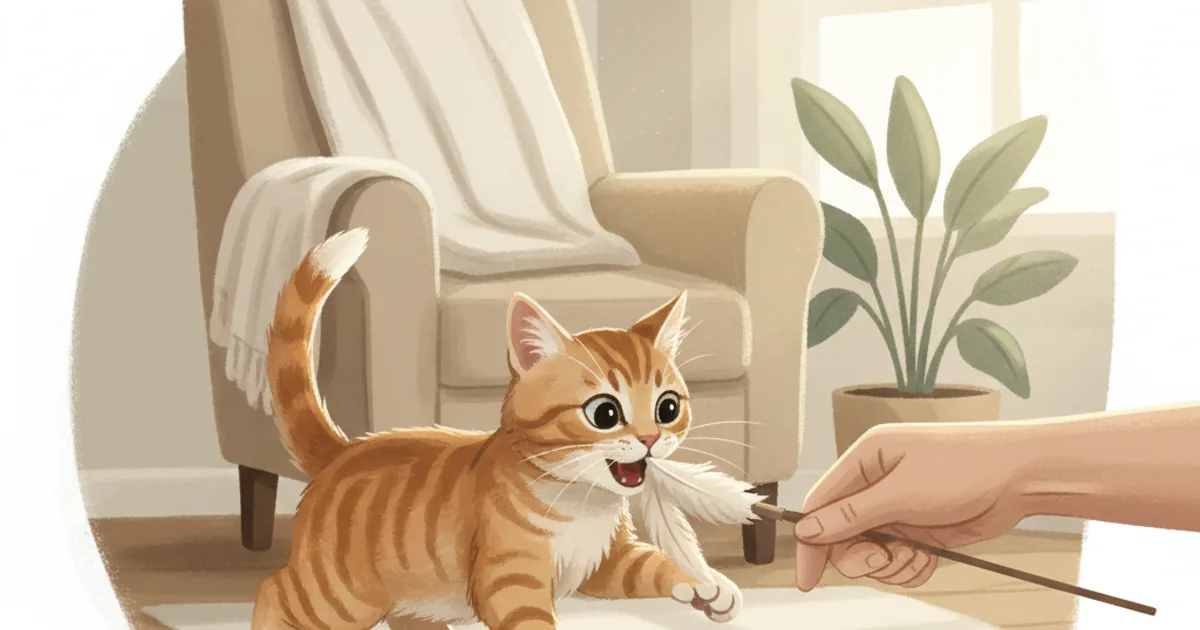
Play aggression is predation practice. A cat — kitten or young adult — sees a moving target (your hand under the blanket, your ankle as you walk past, your fingers tapping the couch), and the predatory hardware fires: low body, hindquarter wiggle, dilated pupils, ambush position, sudden pounce, controlled bite.
The giveaways:
- Body posture: low, often crouched, hindquarters wiggling before the launch.
- Eyes: dilated pupils, fixed on the target. The cat is not making eye contact with you — they're tracking your hand as prey.
- Bite pressure: usually moderate. Real predation bites would be different; this is a practice version with most claws sheathed.
- Trigger: movement. The cat almost never play-bites a stationary hand.
- Mood after: often the cat is energetic and wants more, not defensive.
The fix is redirection, not punishment. Cats do not learn from being squirted with water or yelled at — what they learn is that you are unpredictable and dangerous, which makes them more anxious and more bitey. The actual fix is two-part: (1) every time the kitten goes for skin, the play stops immediately — stand up, walk out of the room, no eye contact; (2) every play session starts with a wand toy or kicker toy so the predatory drive gets a legitimate target.
Two to three weeks of consistency and most cats internalise the rule. Kittens that were removed from their littermates before 12 weeks usually take longer because they didn't get the bite-inhibition lessons their siblings would have taught them. For a deeper read on the developmental windows, see our guide on kitten development and the socialisation window.
Type 2 — Petting-induced aggression (the most underestimated cause)
Many cats have a low and specific tolerance for continuous touch. They want the contact — they came over, settled in, leaned into your hand — and then somewhere around the third minute of stroking, they bite. Owners describe this as their cat being "moody" or "two-faced." It's neither. The cat is operating on a touch budget that's much shorter than humans intuitively expect.
The warning signs in the 5-10 seconds before a petting-induced bite are subtle but consistent:
- Skin twitching along the spine, especially the lower back near the tail base.
- Tail tip flicking — sharp small movements, not the slow wave of contentment.
- Ears rotating outward — going from forward to "airplane ears" angled sideways.
- Head turning toward your hand — the cat is locating the target.
- Sudden stillness — the cat stops the purr, stops the slow blink, freezes.
If you stop petting at any of these signs, no bite. Continue and the cat moves from asking to telling.
The longer-term fix is to learn YOUR cat's threshold and stop just before it. Most cats tolerate touch around the head, cheeks, chin, and the top of the back; fewer tolerate belly, hindquarters, tail base, or feet. Stick to the comfortable zones and end sessions while the cat still wants more — that's how you train a cat who wants longer petting sessions over time, not a cat who is increasingly resentful of being touched.
Type 3 — Fear aggression (the defensive bite)
Fear aggression looks completely different from play. The cat is not predating — the cat is defending. Posture is defensive, ears are flat back against the head, tail is tucked or lashing low, the body angles sideways to look bigger, and the cat hisses, growls, or yowls before the bite. Pupils dilate, but in fear-dilation they are wider than in play-dilation, and the third eyelid may be partially visible.
For the body-language details, our guides on reading ears, eyes, and whiskers and cat tail language walk through the patterns in more depth.
The trigger is usually something approaching the cat — a stranger, another animal, a child running, a vacuum, an unfamiliar smell. The bite is a last resort; the cat would rather flee. If flight is blocked, fight is what's left.
The response is the opposite of what most people instinctively do. Do not approach a fearful cat. Do not try to pick them up, soothe them, or "show them it's okay." Give them an escape route — an open door, a clear path to a hiding spot, a high perch — and back away. They will deescalate on their own once they feel safe.
If the same trigger keeps causing fear aggression (a specific person, an environmental change, a new pet), the work is desensitisation over weeks: brief, controlled exposures at a distance the cat tolerates, paired with high-value food. This is a slow process. There is no shortcut.
Type 4 — Redirected aggression (the misattributed bite)
Redirected aggression is the most confusing to be on the receiving end of, because the cat is not aggressive toward you — you just happen to be standing in the wrong place.
The pattern: something arouses the cat that they cannot reach or resolve — a strange cat outside the window, a sudden loud noise, a new smell on the staircase, a bird on the balcony. The arousal does not dissipate. Then, anywhere from 30 seconds to several hours later, you walk into the room and the cat redirects all of that pent-up arousal at whoever is closest. You are a substitute target, not the actual threat.
The body language usually has elements of both fear and predatory aggression — dilated pupils, tense body, possibly hissing, but also lunging or pouncing. The bite tends to be hard and committed because the cat is operating from a state of high arousal.
The response: do not engage. Do not corner the cat. Move slowly out of the room, close a door between you, and give them at least 30-60 minutes to deescalate. Trying to comfort, pick up, or even talk to a redirected-aggression cat almost always triggers another attack. The arousal needs to drain.
Once the cat is calm again, look for the trigger. If it was a stray cat in the yard, block visual access to that window for a few days. If it was a smell on a returning family member, give the cat space when they come home. In multi-cat homes, redirected aggression can sour relationships between two cats permanently if it happens repeatedly — see multi-cat household harmony for the longer protocol on reintroduction after a bad incident.
The fifth case — sudden aggression in a previously friendly cat
If a cat who has tolerated touch fine for years suddenly bites when you pet a specific spot — or seems to flinch, hiss, or pull away from petting that was previously welcome — pain is high on the list of possible causes.
Cats are professional pain-hiders. The Feline Grimace Scale exists precisely because cats give very few visible signs of pain until the pain is significant. Dental disease, arthritis (very common in cats over 7), abdominal discomfort, soft-tissue injuries, and abscesses all commonly first present as "my cat suddenly bites when I touch them."
Sudden-onset touch-induced aggression is a vet visit, not a behavioural training project. Have the vet check the area the cat is reactive about, do a basic senior workup if the cat is over 7, and rule out pain before you assume the cause is psychological.
What does not work — and why
Three common tactics that consistently make cat aggression worse:
- Punishment — yelling, hitting, squirting with water, scruffing as discipline. Cats do not connect punishment to the behaviour the way dogs sometimes do. What they learn is that you are an unpredictable threat, which raises baseline anxiety and increases all aggression types.
- Pushing through warnings — continuing to pet a cat who is showing tail-flicking, skin-twitching, ears-back signals. This teaches the cat that the early warning system doesn't work and the only thing that gets you to stop is biting. They stop warning. They just bite earlier.
- Forced socialisation — picking up a fearful cat and "showing them" that the trigger is safe. Cats do not trust this kind of forced exposure. Confidence comes from voluntary approach at the cat's own pace.
When to call a vet vs a behaviourist
Vet first for any of these:
- Sudden onset of aggression in a previously friendly cat.
- Aggression triggered by touch in a specific body area.
- Aggression paired with appetite, litter, hiding, or grooming changes.
- Aggression in a cat over 7 who didn't previously bite.
- Aggression after a known injury, illness, or surgery.
Behaviourist (DACVB — board-certified veterinary behaviourist) for any of these, after a vet has ruled out medical:
- Severe aggression that's injuring humans or other animals.
- Long-standing fear aggression that hasn't responded to environmental management.
- Multi-cat aggression that's broken the household.
- Aggression that's escalating despite consistent handling.
General dog trainers, even certified ones, are not the right call for serious feline aggression. The assessment requires both medical and species-specific behavioural expertise.
The role of an AI body-language reader
One of the harder parts of preventing cat bites is reading the warning signs in real time — most people don't have years of practice spotting "tail tip flicking" or the moment ears rotate from forward to airplane. CatMD's body language reads exist for this: take a short clip of your cat in a borderline-touch moment and the app surfaces the cues that suggest stress, predatory arousal, or fear. It's not a diagnosis and it doesn't replace knowing your cat. It's a second pair of eyes that's seen the FGS, AAFP, and ISFM literature on cat body language and can point out what you'd otherwise miss until the bite.
For free CatMD download — informational triage only, not veterinary advice — see the Google Play link.
Editorial note: This article is educational content, reviewed against peer-reviewed feline behaviour sources (Bradshaw & Turner, The Domestic Cat: The Biology of its Behaviour; AAFP & ISFM Feline Environmental Needs Guidelines; Cornell Feline Health Center). It is not a substitute for veterinary diagnosis or treatment. In a medical emergency, contact a licensed veterinarian immediately.
Frequently asked questions
Why does my cat bite me out of nowhere?
Cats rarely bite out of nowhere — the warning signs are usually there a few seconds earlier, just easy to miss. Look for a thrashing tail tip, ears rotating outward or flattening, dilated pupils, skin twitching along the back, and stillness right before the strike. The four most common causes are play aggression (cat is hunting your hand), petting-induced aggression (cat reached their threshold for being touched), redirected aggression (cat was upset by something else and you walked into the doorway), and pain (cat associates touch with hurt). Same behaviour, very different reasons.
What is the difference between play aggression and real aggression?
Play aggression looks like predation: low body, hindquarter wiggle, dilated pupils, ambush position, controlled bite pressure, claws retracted or only partially out. Real aggression — fear or pain — looks defensive: ears flat back against the head, tail tucked or low and lashing, hissing, growling, sideways body angled away, hard staring, and bite pressure that is fast and committed. Play aggression usually targets moving prey-like objects (your hand, your ankle, your toes); fear aggression usually targets whatever is approaching the cat.
What is redirected aggression in cats?
Redirected aggression happens when a cat is aroused by something they cannot reach — an outdoor cat through the window, a loud sound, a smell — and then attacks whoever or whatever is nearby instead. The classic case is the indoor cat who saw a stray cat through a window an hour ago and then suddenly bites the human who walked into the room. The cat is not aggressive toward you; you are a substitute target. Redirected aggression can last from minutes to hours after the triggering event, so give the cat space and time to deescalate.
Why does my cat bite me when I pet them?
Petting-induced aggression is a normal cat behaviour, not a personality flaw. Many cats have a low tolerance for continuous touch — especially around the belly, base of the tail, and hindquarters. The warning signs are subtle: skin twitching, tail tip flicking, ears swivelling back, head turning toward your hand. The cat is asking you to stop. If you keep going, the cat moves from "asking" to "telling" — which is the bite. Solution: pet in short sessions, watch the warning signs, stop before the cat does, and limit petting to the head, cheeks, and chin where most cats stay relaxed.
Could my cat be biting because of pain?
Yes — and this is the cause most owners miss. Cats hide pain extremely well (see our guide on <a href="/library/do-cats-hide-pain">how cats hide pain</a>). If a previously friendly cat suddenly becomes aggressive when touched, especially in a specific area (lower back, hips, mouth, belly), pain is high on the list. Dental disease, arthritis, soft-tissue injury, and abdominal discomfort all commonly present as "my cat suddenly bites me when I pet them." A sudden onset of touch-induced aggression is a vet visit, not a training problem.
How do I stop my kitten from biting?
Kitten biting is mostly play aggression — your hand is a moving target and the kitten is practising predation. The fix is NOT punishment, which makes cats fearful and worse-biting. The fix is redirection: every time the kitten goes for your skin, the play stops immediately (stand up and walk away), and the next play session uses a wand toy or kicker toy. Within 2-3 weeks the kitten learns that hands end play and toys continue play. Kittens removed from littermates too early (before 12 weeks) tend to have harsher bite inhibition and need more redirection work.
When should I see a vet or behaviourist about cat aggression?
See a vet first when aggression is sudden, escalating, targeted at one body area, or paired with any other behaviour change (hiding, appetite change, litter box changes, vocalisation changes). Rule out pain and medical causes before assuming behavioural cause. If the vet rules out medical and the aggression is severe, persistent, or putting humans or other animals at risk, ask for a referral to a board-certified veterinary behaviourist (DACVB in the US). General trainers are not appropriate for serious feline aggression — the assessment requires medical and behavioural expertise.
Triage your cat in under 60 seconds
Not sure if this is an emergency? CatMD runs feline-specific triage on symptoms or photos and returns a 0–99 health score with urgency tier, differentials, and a vet-ready summary.
Get the app