Why Is My Cat Meowing So Much? Causes Explained
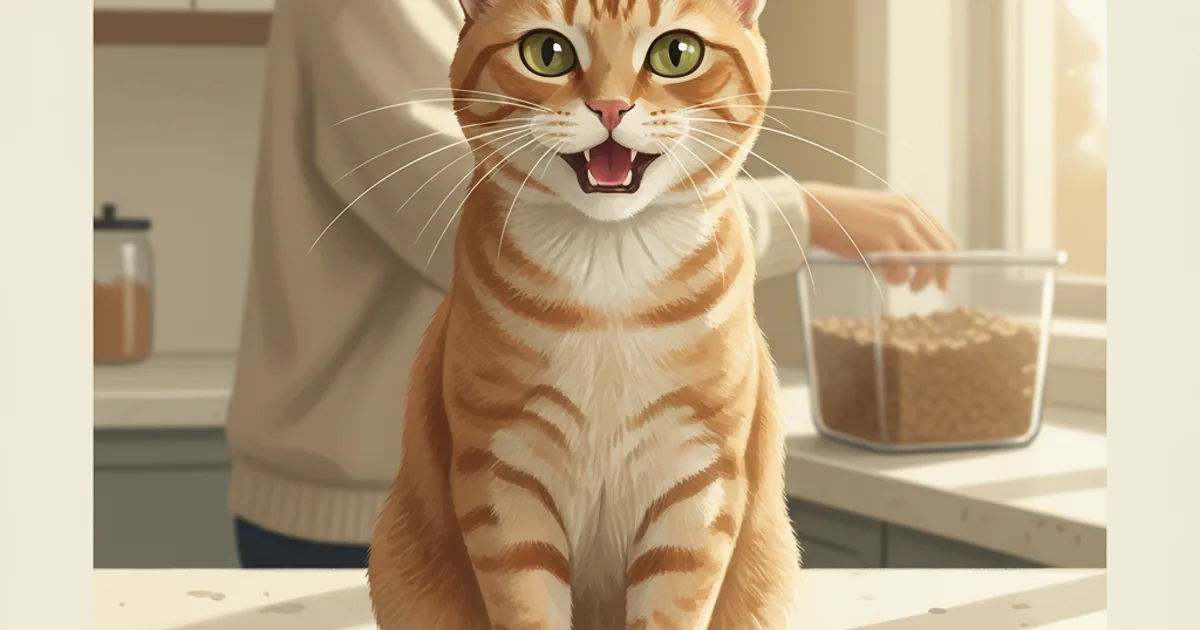
"My cat will not shut up" is one of the most common cat owner complaints — and almost always has a recognisable cause. Cats do not meow excessively for no reason. They meow excessively because they want something, because something has changed medically, or because they've learned that meowing reliably produces a human response.
This guide covers the six main causes of sudden increased meowing, how to tell them apart, and what to do for each one.
How to tell "more than usual" from "normal for this cat"
Some cats are naturally vocal. Oriental breeds (Siamese, Burmese, Tonkinese) talk constantly and that's their baseline. A lifetime-vocal cat doing what they've always done is not "excessive meowing" — it's just who they are.
The signal that matters is a change in your cat's vocalisation pattern: louder than before, more frequent, at new times of day, in new locations, with a different tone. Sudden-onset change is what you're looking for. A cat who has always been chatty staying chatty is not a problem; a previously quiet cat who suddenly won't stop is.
If you're not sure what your cat's baseline is, the useful question is: "Has this changed in the last 4-6 weeks?" If yes, work through the six causes below. If no, your cat is probably just vocal.
Cause 1 — Learned attention-seeking (the most common cause in adult cats)
Adult cats almost never meow at other adult cats. Meowing is a behaviour they've developed specifically for communicating with humans. So when your cat meows at you, they've learned that meowing produces a response.
This is operant conditioning: every time you respond to meowing — even with an irritated "stop it!" or a frustrated trip out of bed at 3 AM to throw the cat out of the room — the cat learns that meowing works. The behaviour gets reinforced. Over weeks and months it grows into "my cat never stops meowing."
The fix:
- Zero-response policy for 2-3 weeks. Do not feed, talk to, open doors for, look at, or react to the meowing. Not even negative attention. The cat does not care whether your reaction is positive or negative — they care that the meowing produced an outcome.
- Brace for the extinction burst. For the first 3-7 days the behaviour will get worse — louder, more frequent, more persistent — because the cat is trying harder to get the response that used to work. This is normal and means the protocol is working. Push through.
- Reinforce the silence. When the cat is quiet, reward that — eye contact, a slow blink back, gentle petting, a treat if appropriate. The cat needs to learn that silence produces good things, meowing produces nothing.
This is the #1 cause and the #1 fix. Most cats whose owners commit to 2-3 weeks of consistency see substantial reduction in meowing. The most common reason it fails: a partner, family member, or roommate breaks the policy and responds once. That single response resets the entire learning cycle.
Cause 2 — Hunger and feeding schedule
Cats evolved as small predators eating 10-15 small meals a day. The standard human practice of feeding twice a day with a 10-12 hour overnight gap is not how cat metabolism is designed to work. Many cats genuinely run out of food before the next meal and start vocalising for hunger.
The signs this is your cause:
- The meowing happens at predictable times — usually morning, sometimes mid-afternoon and late evening.
- The cat goes directly to the food bowl or food storage.
- The cat is at a healthy weight or losing weight (genuinely hungry, not just bored).
- The meowing stops as soon as food is served.
The fix:
- Add a midday meal. Three smaller meals a day usually fixes hunger-related meowing in healthy adult cats.
- Use a timed automatic feeder. Set it to dispense a small portion of dry food on a fixed schedule — morning, midday, evening, and overnight if needed. Food arrives on a timer, not in response to meowing.
- Reconsider the diet. If your cat is genuinely hungry but at a healthy weight, you may be slightly underfeeding. Check the bag's feeding chart against your cat's weight and adjust.
What does NOT work: feeding in response to meowing. That teaches the cat that meowing produces food, which fuses the hunger problem and the learned-attention problem and makes both worse.
Cause 3 — Medical causes (especially in cats over 7)
Several medical conditions present first as increased vocalisation. These are the most important to rule out because they're easy to miss and treating them usually resolves the meowing.
Hyperthyroidism
Overactive thyroid — affects about 10% of cats over 10. The classic pattern: increased vocalisation, restlessness, weight loss despite a strong appetite, increased thirst, sometimes an unkempt coat. Diagnosed with a simple T4 blood test. Highly treatable with medication, radioactive iodine, or surgery. Untreated, it causes heart, kidney, and blood pressure damage.
If your cat is over 7, vocalising more, and has lost any weight recently — even half a kilo — get a thyroid panel.
Pain
Cats hide pain extremely well. One of the few ways pain surfaces is increased vocalisation — especially during specific activities (jumping, eating, using the litter box, being touched). Arthritis is very common in cats over 7 and is the most underdiagnosed pain cause; dental disease is the second.
The pattern: meowing has a specific tone (more anxious, more guttural, sometimes a wail), happens during specific activities, and is paired with other behaviour changes — reduced jumping, reduced grooming, hiding, change in posture. See our guide on how cats hide pain for the full read.
Cognitive dysfunction
Feline cognitive dysfunction syndrome (CDS) — sometimes called feline Alzheimer's — affects about 28% of cats aged 11-14 and over 50% of cats aged 15+. New-onset excessive vocalisation in a cat over 10, especially loud yowling at night, paired with disorientation or confusion, is one of the most common CDS presentations. See our guide on why cats meow at night for the CDS pattern in detail.
CDS is a clinical vet diagnosis. There's no single test — it's an assessment that rules out other causes and looks for the cognitive pattern. The good news: it's manageable with diet, environmental enrichment, and sometimes medication.
Hypertension and kidney disease
Less common but worth mentioning: chronic kidney disease (CKD) and feline hypertension can both present as increased restlessness and vocalisation, especially in older cats. These are detected on senior bloodwork panels.
Rule of thumb: if your cat is over 7 and the meowing has changed recently, the vet visit comes before the behaviour-training assumption. Most owners who do this find the medical cause.
Cause 4 — Anxiety, stress, environmental change
Cats are creatures of routine. Most stress-related meowing has a trigger you can identify if you think back 2-6 weeks. Common triggers:
- New pet in the household — even a friendly addition causes weeks of adjustment.
- Move to a new home — usually 2-4 weeks of increased vocalisation.
- Family member leaving (a child going to university, a partner separating).
- Schedule change — work-from-home changing to office, or vice versa.
- Construction noise, neighbours' new pet, outdoor cats visible from windows.
- Change in litter type, food brand, or where resources are placed.
The fix depends on the trigger. For most environmental changes, time + consistency + extra enrichment (more play, more vertical territory, more hiding spots) resolves the issue over 4-8 weeks. For ongoing triggers (a new cat that didn't integrate well, a noisy environment), the fix is environmental management — see our guide on the five pillars of a happy indoor cat.
If anxiety persists past 8 weeks despite environmental work, a vet visit to discuss anxiolytic medication (gabapentin or other) is reasonable.
Cause 5 — Sex hormones (unspayed females, unneutered males)
This is a less common cause in 2026 because most pet cats are sterilised, but worth flagging. An unspayed female in heat will yowl loudly and continuously for several days every 2-3 weeks during breeding season. An unneutered male will vocalise (and spray) in response to nearby unspayed females.
If your cat is intact and the meowing is rhythmic and seasonal, this is almost certainly the cause. The fix is straightforward: spay/neuter. Aside from resolving the vocalisation, sterilisation reduces several feline cancer risks and is one of the highest-yield welfare interventions in cat care.
Cause 6 — Cognitive decline (separate from CDS)
Senior cats sometimes develop sensory decline (hearing loss, vision loss) and start meowing more to maintain contact with their environment. A deaf cat may meow loudly without realising how loud they are, simply because they can't hear themselves. A partially-sighted cat may vocalise more to "check in" with their humans.
These overlap with CDS and are best diagnosed by your vet. The management is the same direction: predictable routines, night lights, easy access to resources, more direct human interaction to reassure the cat.
How to figure out which cause is yours
| Pattern | Most likely cause | Right next step |
|---|---|---|
| Adult cat, healthy weight, meowing at predictable times tied to food or attention | Learned attention-seeking + possible hunger schedule | Zero-response policy + timed feeder for 2-3 weeks |
| Cat over 7, new-onset, paired with weight loss / restlessness / increased thirst | Hyperthyroidism | Vet visit — T4 blood test |
| Cat over 10, loud yowling especially at night, seems disoriented | Cognitive dysfunction | Vet workup — clinical CDS diagnosis |
| Meowing tied to specific activities (eating, jumping, litter, being touched) | Pain | Vet visit including pain assessment |
| Started after a household change (new pet, move, schedule change) | Anxiety / adjustment | Environmental enrichment + time |
| Intact cat, rhythmic seasonal pattern | Sex hormones | Spay/neuter |
| Senior cat, may also be deaf or partially sighted | Sensory decline | Vet workup, environmental adjustments |
What does NOT work
Three common tactics that consistently make excessive meowing worse:
- Punishment — yelling, water bottles, squirting, scruffing. Cats don't connect the punishment to the behaviour the way some dogs do. What they learn is that you are an unpredictable threat, which raises anxiety and increases meowing.
- Inconsistent response — ignoring the meowing 80% of the time and responding 20% of the time. This is variable reinforcement, the strongest form of conditioning. You are accidentally training your cat to meow MORE.
- Skipping the vet visit when the cat is over 7 — every behaviour training program fails when the underlying cause is medical. Rule out hyperthyroidism, pain, and CDS first.
How CatMD helps
If you're not sure whether the change in your cat's vocalisation is behavioural or medical — especially in a cat over 7 — CatMD's daily check-ins and longitudinal tracking are designed for exactly this kind of "is this a vet visit or not" question. The app tracks weight, appetite, behaviour, and vocalisation patterns over time, so the slow drift toward hyperthyroidism or CDS shows up as a clear trend rather than something you have to remember from week to week.
For cats over 7, the longitudinal picture often catches the early thyroid or arthritis pattern before the owner would notice on their own. Free on Google Play — informational triage only, not veterinary advice. See the Google Play link.
Editorial note: This article is educational content, reviewed against peer-reviewed feline veterinary and behavioural sources (Merck Veterinary Manual; AAFP/AAHA Senior Care Guidelines; Cornell Feline Health Center; Bradshaw & Turner, The Domestic Cat: The Biology of its Behaviour). It is not a substitute for veterinary diagnosis or treatment. In a medical emergency, contact a licensed veterinarian immediately.
Frequently asked questions
Why has my cat suddenly started meowing all the time?
Sudden-onset excessive meowing is usually caused by one of three things: (1) learned reinforcement — your cat figured out that meowing produces a human response, even an irritated one; (2) a medical change — hyperthyroidism, pain, or cognitive decline (especially in cats over 7) often present first as increased vocalisation; or (3) an environmental change the cat is stressed about — new pet, new schedule, move, family member gone. The pattern that distinguishes these: medical causes usually pair with other changes (weight loss, restlessness, hiding); learned attention-seeking pairs with the cat going quiet when you actively ignore it for several days; environmental stress usually has a clear trigger you can identify if you think back a few weeks.
Is excessive meowing a sign of pain?
It can be. Cats hide pain extremely well (see our guide on <a href="/library/do-cats-hide-pain">how cats hide pain</a>), and one of the few ways pain surfaces is increased vocalisation — especially when the cat is moving, jumping, using the litter box, or being touched. Pain-related meowing usually has a specific tone (more anxious, longer, more guttural) and is paired with other behaviour changes: reduced jumping, reduced grooming, hiding, or change in posture. If your cat is meowing more AND showing any of those, get a vet check before assuming behaviour cause.
Can I train my cat to meow less?
Yes, if the cause is learned attention-seeking. The protocol is a hard zero-response policy: do not feed, talk to, open doors for, or react to the meowing for 2-3 weeks. The behaviour will get worse for the first 3-7 days (extinction burst — the cat tries harder before giving up), then it will reliably decrease. Combine zero-response with a structured play-eat-sleep evening sequence (15-20 min of wand-toy play, then a meal, then lights out) and the daytime meowing usually drops within 2-4 weeks. This does NOT work if the cause is medical, hunger from underfeeding, or cognitive decline — those need different interventions.
Why does my older cat meow more than they used to?
New-onset increased meowing in a cat over 10 is one of the most common signs of feline cognitive dysfunction syndrome (CDS) — the cat equivalent of dementia. The cat may seem disoriented, vocalise in odd locations, stare at walls, or not immediately recognise familiar people. Hyperthyroidism (overactive thyroid) is the other common over-10 cause — affects about 10% of cats over 10 and shows up as increased vocalisation, weight loss despite eating well, and restlessness. Both are vet diagnoses. Both are treatable. See <a href="/library/senior-cat-care-after-age-10">senior cat care after age 10</a> for what to track.
Is my cat meowing too much because they're hungry?
Possibly. Cats are designed to eat 10-15 small meals a day, not 2 large ones. If your cat is fed twice a day with a long gap between meals — especially overnight — they may genuinely run out of food before the next meal and start vocalising for food. The fix: add a small midday meal, or use an automatic timed feeder that dispenses dry food on a fixed schedule. The food arrives on a timer, NOT in response to meowing. Feeding in response to meowing teaches the cat that meowing produces food, which makes the problem worse.
Why does my cat meow at me constantly?
Adult cats almost never meow at other cats — meowing is a behaviour they've developed specifically for communication with humans. So when your cat meows at you constantly, they're trying to tell you something OR they've learned that meowing is how they get what they want from you. The most useful question to ask: "what does my cat do RIGHT BEFORE the meowing?" If the cat goes to a specific location (door, food bowl, lap), that tells you what they're asking for. If they meow randomly, look for a learned-reinforcement pattern — what have you done in the past in response to the meowing? Whatever that is, the cat is asking for more of it.
When should I see a vet about excessive meowing?
See a vet if: (1) the meowing started suddenly in a cat who was previously quieter; (2) your cat is over 7 and the change is new; (3) the meowing is paired with weight loss, increased thirst, increased appetite, reduced jumping, hiding, or any litter box change; (4) the meowing has a new tone — more anxious, more guttural, more prolonged; (5) the cat seems disoriented when meowing; or (6) the meowing happens around eating, jumping, using the litter box, or being touched. Vet-first when in doubt. Behaviour training only works when medical causes have been ruled out.
Triage your cat in under 60 seconds
Not sure if this is an emergency? CatMD runs feline-specific triage on symptoms or photos and returns a 0–99 health score with urgency tier, differentials, and a vet-ready summary.
Get the app