How to Introduce a New Kitten to Your Resident Cat
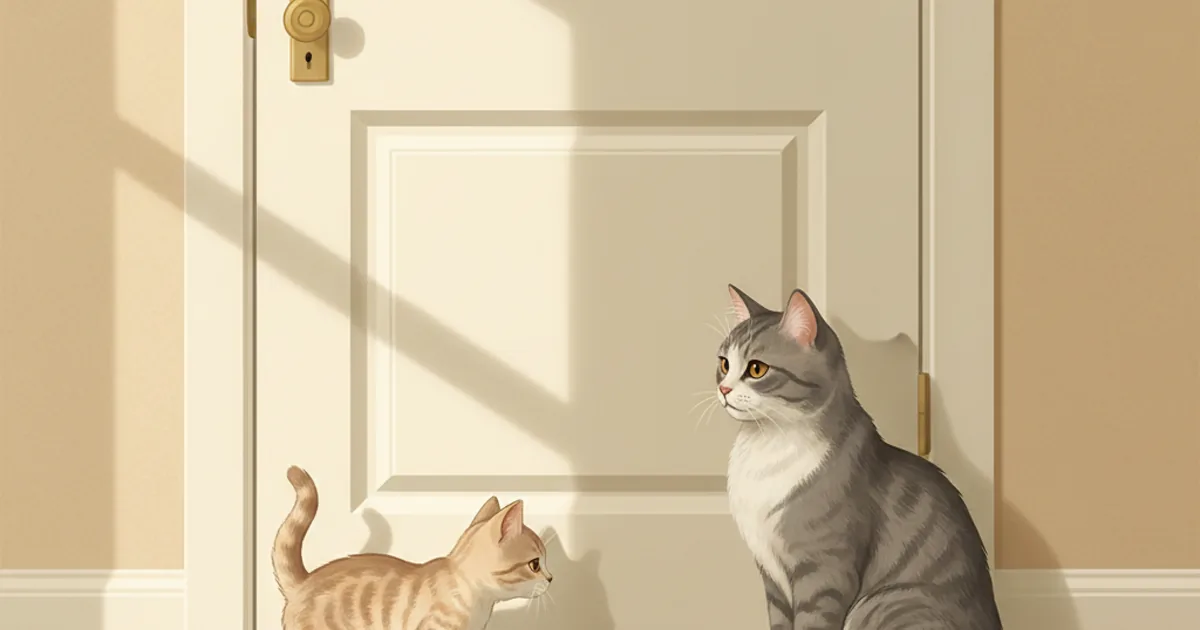
Most multi-cat conflict starts on day one. The owner brings the new kitten home, opens the carrier, lets the resident cat sniff, and waits to see what happens. What happens, usually, is hissing — and within five minutes the relationship is off to a start the cats may never fully recover from.
This is preventable. The slow-introduction protocol — used by feline behaviourists, the AAFP and ISFM, and shelters with high adoption success rates — is built around the fact that cats are not pack animals and do not enjoy negotiating with strangers in real time. They need scent before sight, sight before touch, and touch on their own terms.
This guide walks through the full protocol, what to do at each stage, and how to recover if the first meeting went badly.
Why "let them work it out" doesn't work
Dogs, when introduced to each other, can sometimes work things out through a few snarky exchanges and a clear hierarchy. Cats cannot. Cats are territorial solitary hunters who evolved to avoid conflict with other cats by maintaining distance and home-range separation. There is no built-in "we live together now" instinct.
When two strange cats are forced into close contact, the default is a stress response that produces fight, flight, or freeze. A bad first impression registers as "this animal is a threat in my territory" — and that imprint is sticky. Cats who had a hostile first meeting can take months to recover, and some never do.
The slow-introduction protocol works because it gives each cat enough information about the other — first scent, then sight, then touch — to update their threat model before they have to negotiate sharing space.
The 5-stage slow-introduction protocol
Stage 1 — Separate territory (days 1-3)
The new kitten goes into a "base camp" room before they even meet the resident cat. This is one closed-door room with everything the kitten needs: food, water, litter box, scratching post, bed, toys. The resident cat has the rest of the house.
The kitten stays in base camp full-time for the first few days. Two reasons: (1) the kitten needs to feel safe somewhere before they can handle the stress of meeting another cat; (2) the resident cat needs to register, smell, and process the presence of another cat in the home without being expected to share their physical space yet.
You will see the resident cat sniffing at the base-camp door, possibly hissing through it. That is fine. They are gathering information.
Stage 2 — Scent swap (days 3-7)
Every day, swap items that carry each cat's scent into the other cat's space:
- Take a soft cloth or sock, rub it gently on one cat's cheeks and chin, and leave it in the other cat's space.
- Swap their bedding or blankets between the two areas.
- Place a small dish of high-value food (treats, lickable churu) near the scent-marked item so each cat associates the other's smell with something good.
Watch how each cat reacts to the other's scent. Neutral or curious investigation is the goal. A short hiss when the scent first arrives is normal. Sustained hissing, refusing to enter the room, refusing to eat near the swapped item — those mean stay at this stage longer.
You can also swap the cats' spaces briefly — let the kitten explore the main house for 15 minutes while the resident cat is in the base-camp room. They smell each other's territory without seeing each other. This is the second-most-effective tool in the protocol.
Stage 3 — Visual contact through a barrier (days 5-10)
Once scent swap is going well, the cats can see each other through a barrier — most commonly a baby gate at the base-camp door (with a second baby gate stacked if your resident cat can jump a single one), or a screen door, or a glass door.
Feed them at the same time on opposite sides of the barrier. Start with bowls far apart from the barrier (the kitten 4-5 metres back, the resident cat the same on their side). Each day, move the bowls slightly closer. The goal is for both cats to eat calmly in sight of each other.
If one cat refuses to eat, the bowls are too close. Move them apart and try again the next day. There is no rushing this stage — the principle is that both cats are doing something positive (eating) in the presence of the other, which builds the association.
Stage 4 — Supervised meetings (days 8-14)
Once meal-with-barrier is going smoothly, open the barrier for short supervised sessions — 5 minutes at first, building to 30. Stay in the room. Keep wand toys nearby; if tension rises, redirect into play (which lowers arousal and gives both cats something to do that isn't focused on each other).
What you're looking for in a good meeting:
- Both cats can be in the same room without staring.
- Body postures are loose — tails up or relaxed, not puffed or tucked.
- Ears are neutral or forward, not flat.
- If they sniff each other and one walks away, that is a successful interaction. Cats do not need to be friends to coexist.
End every session before tension rises. Stop while it's still going well. Short successful meetings build trust; long meetings that end in a hiss damage trust.
Stage 5 — Shared space (week 2+)
When supervised meetings are going calmly for 5-7 days in a row, you can leave the door to the base camp open during the day and let the cats move freely. Keep the base camp set up for at least 2-3 more weeks — the kitten may want to retreat there, and that's healthy. Many cats keep their original base-camp space as a permanent safe zone.
Multi-cat households need resource redundancy to prevent low-grade conflict from re-emerging — the AAFP/ISFM environmental needs framework recommends one litter box per cat plus one extra, separated feeding stations, multiple water sources, and vertical territory (shelves, cat trees, window perches). For the longer-term resource design, see multi-cat household harmony and the five pillars of a happy indoor cat.
What to do when it goes wrong
Most introductions hit a setback. Here's what to do for the common failure modes:
"They hissed and growled on first sight"
Separate immediately. Go back to scent swap for 3-5 more days. Then try visual contact again at a much greater distance. The cats are giving you information that you went too fast; respect it and slow down. The relationship is not ruined — first-meeting hissing is salvageable as long as you don't force continued contact through a negative response.
"They had one bad fight"
Separate immediately, even if it looks like the fight is over. Give them 48 hours fully apart — no visual contact through a door, no smelling each other. Then restart the protocol from Stage 2 (scent swap). One bad fight does not require starting from scratch, but it does require backing up and rebuilding the positive associations.
"The resident cat is hiding and not eating"
Stress-related anorexia in cats is medical, not just behavioural. If the resident cat goes more than 24 hours without eating, call the vet — cats are vulnerable to hepatic lipidosis when they stop eating, and the protocol can pause for a few days while the vet assesses.
"They've been together a month and they still hate each other"
At this point you're looking at one of three possibilities: (1) the introduction was rushed and the relationship needs a full reset with weeks of separation and a slower restart; (2) there's an environmental design issue — not enough litter boxes, not enough vertical territory, food bowls too close together; or (3) the cats are not a personality match. A board-certified veterinary behaviourist can help distinguish these. Some cats genuinely don't want a housemate and the kindest answer is finding the kitten a different home where they can be the only cat or paired with a more compatible companion.
What about kittens with kittens?
Kitten-to-kitten introductions are usually the easiest. Two kittens under 4 months old often skip the slow protocol entirely and integrate within hours. They share play styles, energy levels, and the same socialisation window. If you're getting your first cat and have the option, two littermates or two age-matched kittens from the same shelter is one of the lowest-friction multi-cat setups.
The window matters — the socialisation window in cats closes around 7-9 weeks of age, and kittens introduced to other cats during that window form much more flexible adult social patterns. For the developmental detail, see kitten development windows.
Using AI to read the introduction
One of the harder parts of a slow introduction is reading body language in the moment. Is that tail flick playful or warning? Are those ears neutral or starting to flatten? Most owners get this right with experience but slow with the first introduction.
CatMD's body language reads exist for this kind of in-the-moment check — take a 6-second clip of either cat during a supervised meeting and the app tells you the dominant signals: relaxed, alert, alarmed, defensive, predatory. It's a second pair of eyes calibrated against feline ethology research. Not a substitute for being there, but a useful gut-check when you're not sure if you should let the meeting continue or end it.
Free on Google Play — informational triage only, not veterinary advice. See the Google Play link.
Editorial note: This article is educational content, reviewed against peer-reviewed feline behaviour sources (AAFP & ISFM Feline Environmental Needs Guidelines; Bradshaw & Turner, The Domestic Cat: The Biology of its Behaviour; ISFM cat-friendly practice consensus). It is not a substitute for veterinary diagnosis or treatment. In a medical emergency, contact a licensed veterinarian immediately.
Frequently asked questions
How long does it take to introduce a new kitten to a resident cat?
The slow-introduction protocol typically runs 10-14 days for most kitten-to-adult introductions, though confident, sociable cats can sometimes integrate in 5-7 days and territorial or anxious adult cats may need 4-6 weeks. The mistake is rushing — every introduction skipped or shortened raises the chance of a bad first impression that can sour the relationship permanently. Plan for two weeks at minimum and let the cats set the actual pace.
Should I let the cats meet face-to-face right away?
No. Face-to-face introduction on day one is the single most common mistake that causes long-term multi-cat conflict. The resident cat needs time to process that there is another cat in the territory, the new kitten needs time to feel safe in their starter space, and both need to build positive associations through scent before they meet visually, and through visual contact before they meet physically. Skipping these stages frequently produces a relationship the cats spend the rest of their lives recovering from.
What is the scent swap method?
Scent swap is the cornerstone of the introduction protocol. Each day, you swap items that carry each cat's scent — bedding, blankets, the soft brush you used on one cat — into the other cat's space. Both cats learn the other's smell in their own safe zone, without the stress of a physical meeting. After 3-5 days of scent swapping with neutral or positive reactions (no hissing at the smell, eating normally near the swapped item), you move to the next stage. If either cat hisses at the scent or refuses to eat near it, slow down and stay at this stage longer.
My cats hissed and growled at the first meeting. Is the introduction ruined?
Almost never. A first hiss or growl is information, not failure. Separate the cats immediately, give them 24-48 hours apart, and back up one stage in the protocol — usually returning to scent swap and visual contact through a barrier. The relationship recovers fine if you respect the signal and slow down. What does damage the relationship long-term is forcing continued contact after a negative reaction, or letting them "work it out" through repeated fights. Cats do not work it out. They escalate.
How do I introduce a kitten to a multi-cat household?
Same protocol, but introduce the kitten to each resident cat one at a time, not all at once. Start with the most confident, sociable resident cat first — that introduction is usually easiest and sets a positive tone. Add the next resident cat to the visual-contact stage only after the first introduction is going well. Multi-cat introductions take longer (3-6 weeks is normal) but the staged approach prevents a single bad reaction from souring the kitten on all your cats at once. See <a href="/library/multi-cat-household-harmony">multi-cat household harmony</a> for the longer-term resource design that prevents conflict after introduction.
What if my resident cat is older and grumpy?
Older cats — especially over 10 — often have lower tolerance for kitten energy, may have undiagnosed pain that makes social stress harder, and frequently need 4-8 weeks of slow introduction rather than 2. Get the resident cat a senior vet check before introducing a kitten (arthritis is common and untreated arthritis makes EVERY cat grumpier toward intruders), and consider whether your senior cat genuinely wants a companion or whether you're bringing in a kitten for your own reasons. Some senior cats are happiest as the only cat. See <a href="/library/senior-cat-care-after-age-10">senior cat care after age 10</a>.
When should I be worried about the introduction?
Worry if: physical fighting (not hissing — actual contact) breaks out and continues every time the cats see each other; either cat stops eating, hides for more than 24 hours, or uses the litter box outside the box; the resident cat shows signs of stress-induced illness (vomiting, urinating outside the box, overgrooming, sudden weight loss). These are signs the introduction is going too fast or the match isn't working. Back off completely, give both cats their own territory for a few days, and consider consulting a veterinary behaviourist before continuing.
Triage your cat in under 60 seconds
Not sure if this is an emergency? CatMD runs feline-specific triage on symptoms or photos and returns a 0–99 health score with urgency tier, differentials, and a vet-ready summary.
Get the app